
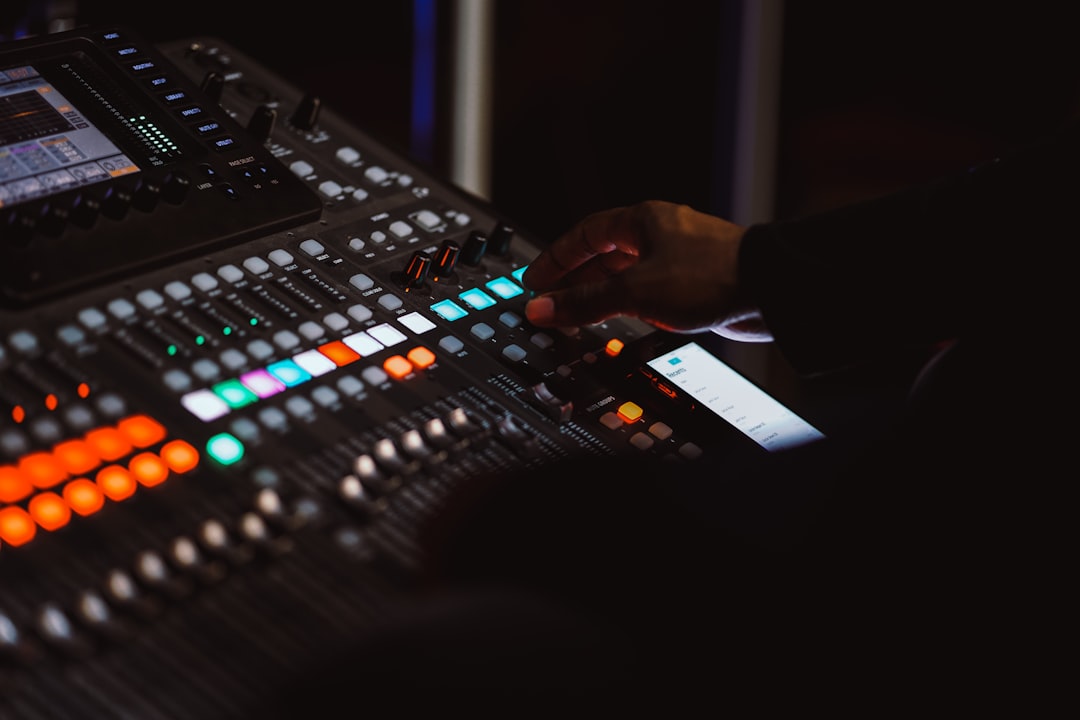
Learning how to mix trap drums comes down to three things: a clean, controlled 808 that anchors the low end, a snare or clap that cuts through the middle, and crisp hi-hats that add movement up top without getting harsh. Get those three elements sitting together and everything else falls into place. The moves below are starting points, not laws — trust your ears and your monitors over any number on a screen.
Violet Recording is reader-supported — we may earn a commission from links on this page, at no extra cost to you.
Start with levels and let the 808 lead
Before touching a single plugin, balance your faders. Trap lives and dies on the low end, so the 808 and kick are the foundation everything else sits around. Pull all faders down, then bring up the 808 first until it feels solid but not overwhelming — you want it to move air, not swallow the mix. Add the kick next, then snare/clap, then hats, then any percussion or fills.
A quick tip that saves hours: mix at a moderate volume, and reference on more than one system. What thumps on your monitors can disappear on a phone speaker, and trap gets played on phones a lot. If you’re unsure whether your low end translates, check the mono sum and make sure the 808 doesn’t vanish — a common problem when stereo widening or sample layering causes phase issues. Solid gain staging from the start keeps every plugin downstream behaving predictably.
Getting the 808 and kick to work together
The single biggest trap-drum problem is the 808 and kick fighting for the same space. Both live in the sub and low-mid region, and when they overlap you get a muddy, undefined low end that pumps unpredictably. You have two reliable fixes.
First, EQ them into separate lanes. An 808’s fundamental usually sits somewhere around 40–80 Hz depending on the note. Let the 808 own the sub, and high-pass the kick a little or carve a gentle dip around the 808’s fundamental so the kick’s punch lives higher — often in the 80–150 Hz “knock” region plus some beater click up around 2–5 kHz. That way the kick provides transient attack while the 808 provides sustained weight.
Second, use sidechain compression on the 808, triggered by the kick. A fast attack and quick release with just 1–3 dB of ducking lets the kick punch through cleanly each time it hits, then the 808 recovers instantly. You don’t need the obvious pumping effect here — subtle is better. If your 808 and kick are essentially hitting on the same beats, sometimes the cleanest answer is to tune the kick to complement the 808 or simply layer a short click-only kick on top for attack.
How to mix trap drums with EQ that carves space
Subtractive EQ is your main tool for clarity. The goal isn’t to boost everything — it’s to remove what each element doesn’t need so they stop masking each other. Here are sensible starting points to adjust by ear:
- 808: High-pass out any rumble below ~30 Hz that your speakers can’t reproduce anyway. If it’s boomy, try a narrow cut somewhere in the 150–300 Hz mud zone.
- Kick: High-pass below ~40–50 Hz if the 808 owns the sub, boost a touch of knock around 80–120 Hz, and add click up around 3–5 kHz if it needs to cut.
- Snare/clap: Body lives around 200 Hz, snap and crack around 3–6 kHz. High-pass below ~150–200 Hz to clear space for the low end.
- Hi-hats: High-pass fairly aggressively — often up to 300–500 Hz — since hats need no low end. Tame harshness with a small dip in the 5–8 kHz range if they’re piercing, and add air above 10 kHz for sparkle.
Stock DAW EQs handle all of this perfectly well — you don’t need anything fancy to carve clean space. If you want a fast reference for where instruments live, our free EQ cheat sheet and audio tools are handy while you learn the ranges. For the deeper theory behind these moves, our guide to EQ and compression fundamentals is worth a read.
Compression: control the snare, tighten the hats
Trap drums often come from samples that are already fairly consistent, so you don’t need heavy compression the way you might on a live kit. Use it deliberately.
On the snare or clap, a moderate ratio around 2:1 to 4:1 with a medium attack (let the transient through) and a medium release can add sustain and make the hit feel bigger — aim for just a few dB of gain reduction. On hi-hats, light compression can smooth out uneven velocities so the pattern sits evenly. The 808 rarely needs compression for dynamics since it’s usually a sustained tone, but a compressor or limiter can tame the odd peak so it stays glued to the sub level.
Parallel compression is a favourite trick for trap drums: duplicate the drum bus, crush the copy hard, and blend it underneath the clean signal for weight and aggression without losing the transients. Stock compressors do this job fine, though a dedicated character compressor from a source like (Plugin Boutique) can add colour if you want a specific vintage or “smash” flavour — treat it as a genuine upgrade, not a requirement.
Saturation and distortion for weight and grit
Here’s a secret about big 808s: a lot of their perceived loudness on small speakers comes from harmonics, not sub. Adding gentle saturation or distortion to the 808 generates upper harmonics that let phones and laptops “hear” a bass note they physically can’t reproduce. Start subtle — a touch of tape, tube, or soft clipping — and A/B on a phone speaker to confirm the note still reads.
Distortion is also a classic move on hi-hats and the whole drum bus for that gritty, in-your-face trap character. Your DAW almost certainly ships a saturator that gets you most of the way. If you find yourself wanting a specific analogue-modelled flavour or a dedicated 808 distortion tool, that’s a reasonable place to look at options from (Plugin Boutique) — but again, stock does most of this job well.
Space, width, and glue on the drum bus
Route all your drums to a single drum bus so you can shape them as one instrument. Keep the 808 and kick centred and mono in the low end — width down low causes phase problems and a weaker mix. Pan hats, percussion, and fills gently left and right to create space and stereo interest up top.
Reverb in trap is usually used sparingly and mostly on snares, claps, and the occasional vocal-style drum fill — a short room or plate adds dimension without washing out the tightness the genre needs. A little goes a long way. Our guide to using reverb and delay covers how to keep effects from muddying your low end. On the bus itself, gentle glue compression (a slow attack, low ratio, 1–2 dB of reduction) can make the kit breathe as one unit.
Loudness and handing off to mastering
Trap is a loud genre, but resist the urge to slam a limiter on your master while you’re still mixing — that hides balance problems. Get the mix sounding right first, then think about loudness. Most streaming platforms normalise to roughly -14 LUFS integrated, so an ultra-hot master mainly gets turned back down; that said, many trap masters are intentionally pushed louder for punch and impact. Aim for a mix that leaves headroom (peaks around -6 dBFS is a comfortable target) so the mastering stage has room to work.
If you want to understand the numbers, see our LUFS explainer and what mastering actually does. When you’re ready to finalise a track and don’t have a dedicated mastering engineer, an online service like LANDR can get you a competitive, loud master quickly —. For more on the whole beat-to-song workflow, our beginner’s guide to mixing your first song ties it all together, and the full mixing and mastering hub has the rest.
Frequently asked questions
How loud should my 808 be in a trap mix?
Loud enough to anchor the track without burying everything else — the 808 and kick are typically the loudest elements in trap. Rather than chasing a specific fader number, balance it against your snare and hats, then check on a phone and in mono to confirm it still cuts through. If it disappears on small speakers, add saturation for harmonics rather than just raising the fader.
Should I sidechain my 808 to the kick?
Usually yes, at least a little. A fast, subtle sidechain (1–3 dB of ducking triggered by the kick) clears momentary space so the kick’s transient punches through cleanly without the two low-end sources smearing together. Keep it gentle unless you specifically want an audible pumping effect as a stylistic choice.
Do I need expensive plugins to mix trap drums?
No. Your DAW’s stock EQ, compressor, saturator, and limiter can produce a professional, hard-hitting trap mix. Good balance, clean EQ separation between the 808 and kick, and tasteful saturation matter far more than the brand of plugin. Add third-party tools only when you want a specific colour or workflow they genuinely provide.



