
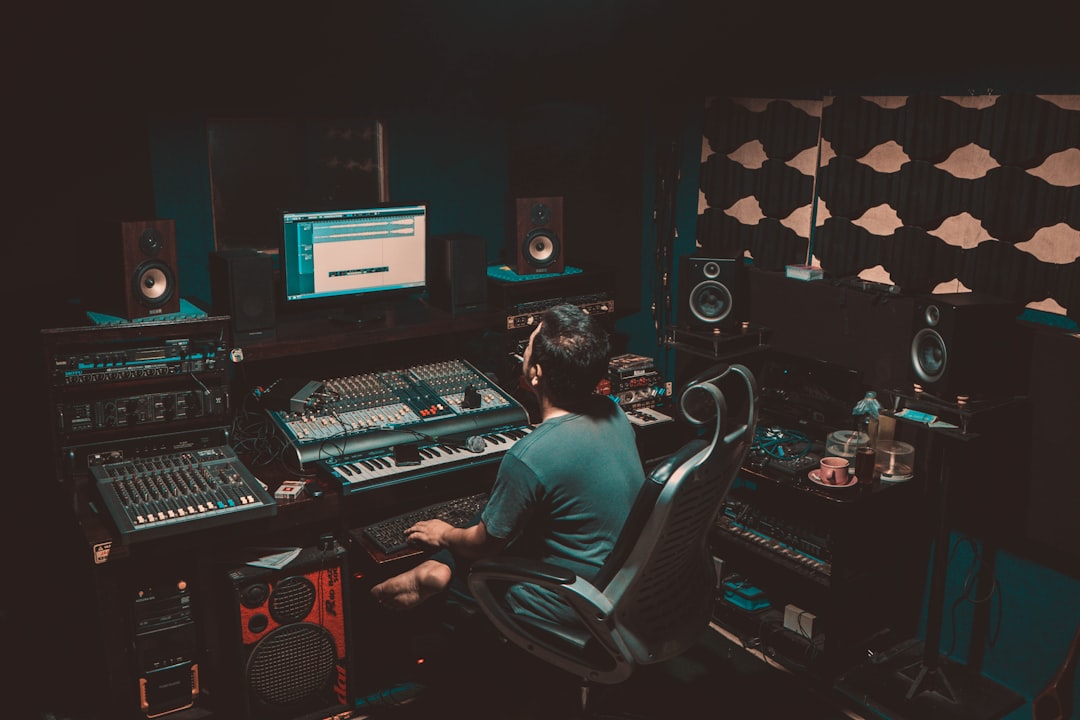
You do not need a 16-channel rig to capture a real performance. If you want to record a band with two mics, a well-chosen stereo pair placed in the right spot can capture a full, balanced, surprisingly professional recording of a live group playing together in one room. This approach, sometimes called minimalist or purist recording, trades the endless control of close-miking every instrument for something arguably more valuable: a natural sense of the band as a single living unit, with real depth, blend and energy. This guide covers which stereo techniques to use, exactly where to place the mics, what levels to target, and how to get the balance right before you hit record rather than after.
Choosing your two mics and stereo technique
A matched pair of small-diaphragm condensers is the classic choice because they capture detail and handle a stereo field cleanly. Affordable matched pairs like the Rode NT5s or sE Electronics sE7s work well; a pair of large-diaphragm condensers also works if that is what you own. The technique you use determines how the two mics relate to each other and how wide and focused the result feels.
- XY (coincident). Place the two mic capsules almost touching, one above the other, angled apart at 90 degrees. This gives a focused, mono-compatible image with no phase issues, ideal when you are unsure about your room.
- ORTF. Space the capsules 17 cm (about 7 inches) apart and angle them outward at 110 degrees. This mimics human hearing and gives a wider, more realistic stereo image while staying reasonably mono-safe.
- Spaced pair (AB). Two mics placed 40 to 80 cm apart pointing forward, for the widest, most spacious sound. It needs a good room and care to avoid phase problems, so keep both mics equidistant from the main sound source.
For most home setups recording a small band, ORTF is the sweet spot: wide enough to feel real, forgiving enough to stay solid in mono.
How to record a band with two mics: placement and balance
Here is the key idea that separates this from close-miking: with two mics, the room is your mixing console and the musicians are your faders. You cannot turn up the quiet singer in the mix afterward, so you balance the band by physically moving people. Start with the stereo pair on a stand roughly 2 to 3 metres (6 to 10 feet) in front of the band, at head height or slightly above, aimed down at the group.
Then adjust by ear. If the drums overpower everything, move the kit further back or the pair further away. If a quiet acoustic guitar disappears, move that player closer to the mics. Louder sources go further from the mics; quieter sources come closer. Do a full run-through, listen back, move people, and repeat. Getting the balance right in the room is the entire craft here, and it is faster than it sounds once you accept that you are arranging bodies, not automating volume.
Set your interface gain so the loudest peaks of the whole performance land around -12 to -6 dBFS. A live band is dynamic, so leave that headroom and never let a loud chorus approach 0 dBFS, where it clips irreparably. Because you are not monitoring through effects, latency is less critical, but keeping your buffer at a moderate 256 samples keeps the system stable during a long take.
Room, treatment and capturing a clean take
With two mics, the room is part of the instrument, so its character is baked in. A bright, boxy room with hard walls will add slap-back and boom; a room with some soft furnishings, a rug, a sofa and a few blankets on the harshest reflective walls will sound warmer and clearer. You do not need a treated studio, but a bit of damping behind and around the mics tames the worst reflections. If the room is very live, move the whole setup tighter and closer to the band to favour the direct sound over the reflections.
Because there is no fixing the balance later, the performance is everything. Get comfortable takes, record several complete passes, and pick the best whole performance rather than trying to comp small pieces, since two ambient mics do not edit together as invisibly as close-miked tracks. Record a few seconds of silent room tone too, which helps if you need to patch a gap.
Mixing a two-mic recording
The beauty of this method is how little mixing it needs. Pan the two mic tracks hard left and right to open up the stereo image the technique captured. From there, a gentle high-pass around 40 to 60 Hz removes subsonic rumble, and light bus compression can glue the performance together and add a touch of energy. Resist the urge to carve heavy EQ, because you cannot separate instruments that share both mics; instead, if something is wrong tonally, it is usually faster to re-record with better placement.
Our home recording hub has companion walkthroughs on stereo miking and room treatment, and the guide on mixing live recordings digs into gentle bus processing that flatters a room capture. For free browser-based metronomes, tuners and metering tools to prep your session, visit the Violet Recording tools hub. Learn to record a band with two mics well and you gain something rare in home recording: a fast, natural, human-sounding capture that reminds everyone why they play together in the first place.



