
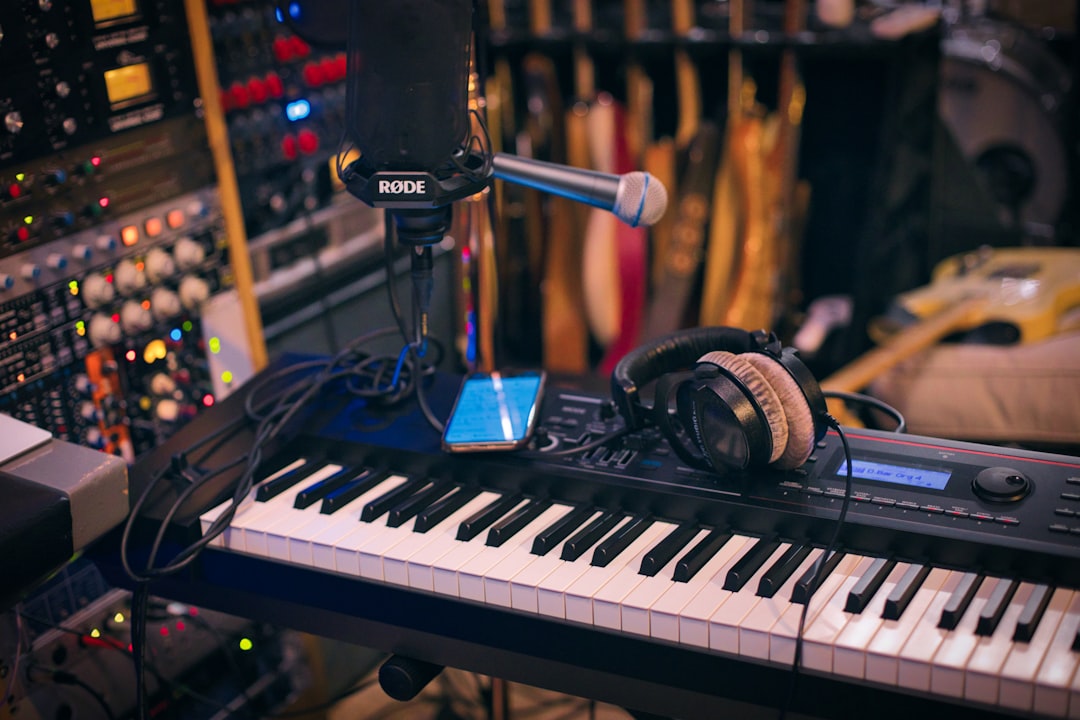
The most useful beat making tips for beginners are simpler than they sound: start with a groove you can nod your head to, program drums that breathe instead of marching, tune your 808 to the key of your melody, and arrange the parts so the track goes somewhere. Get those four right and a rough loop turns into a beat people actually want to hear. This guide walks through each one in plain English, in the order you’d tackle them.
Violet Recording is reader-supported — we may earn a commission from links on this page, at no extra cost to you.
What you’ll need before you start
You don’t need a rack of expensive gear. You need a DAW (Digital Audio Workstation) — FL Studio, Ableton Live, GarageBand and Logic are all common starting points — a pair of headphones or monitors you trust, and a few hours of patience. Everything below works whether you’re on a laptop or a phone. If you’re still choosing software, our rundowns of the best free DAWs for beginners and the best DAW for hip-hop will save you some trial and error.
The five-minute overview
Every beat, no matter the genre, is built from the same layers stacked in roughly this order: drums for the pulse, a bass or 808 for the low-end weight, a melodic element (piano, guitar, synth or a sample) for the mood, and a few extra sounds for texture. Get a loop of those working together, then arrange it into a full song. That’s the whole job. The rest of this guide is detail.
Set the tempo and pick a key first
Before you place a single sound, decide how fast the beat should move. Tempo is measured in BPM (beats per minute) and it sets the entire feel. Boom-bap hip-hop usually sits around 85–95 BPM, trap around 130–150 (often felt at half that), lo-fi around 70–90, and most pop and house lands near 120–128. If you’re not sure, tap along to a track you love and read the tempo off a tool like our free BPM finder and metronome, then start there.
Pick a musical key too, even loosely. Working in one key — say A minor — keeps your melody, bassline and 808 in agreement so nothing clashes. Minor keys are the default for hip-hop, trap and lo-fi because they sound moody and serious; major keys feel brighter and more upbeat. You can always transpose later, but committing early stops you from stacking notes that fight each other.
Beat making tips for programming drums that groove
This is where most first beats fall flat, so it’s worth slowing down. A drum pattern is built from three core pieces: the kick (the low thump), the snare or clap (the backbeat), and the hi-hats (the fast ticking on top). In a standard four-bar loop divided into sixteen steps, the classic starting point is a kick on step 1, a snare on steps 5 and 13 (beats 2 and 4), and hi-hats running steadily across the top.
That grid is your skeleton, not your finished beat. The single biggest upgrade a beginner can make is to stop everything landing exactly on the grid. Real drummers are never perfectly on time, and that tiny human slop is what makes a groove feel alive.
Add swing so it doesn’t sound robotic
Swing (sometimes called shuffle) nudges every other note slightly late, giving the beat a rolling, laid-back bounce instead of a stiff march. Nearly every DAW has a swing or groove percentage — try dialling in 8–20% and listen to how the hi-hats loosen up. Too much and it sounds drunk; a little goes a long way. For trap especially, programming hi-hat rolls (rapid bursts of 1/32 or 1/64 notes) and varying their velocity — how hard each hit sounds — is what separates a pro-sounding pattern from a flat one.
Use velocity and ghost notes
Velocity controls how loud each individual hit is. If every hi-hat is at full volume, the pattern sounds like a machine gun. Lower some, raise others, and suddenly there’s a rhythm inside the rhythm. Quiet “ghost notes” — barely-audible snare or hat hits between the main ones — add movement without cluttering the mix. This one habit will improve your drums more than any new sample pack.
Dial in your 808 and low end
The 808 — a deep, sustained bass sound named after the Roland TR-808 drum machine — is the backbone of modern hip-hop and trap. It doubles as both your kick’s weight and your bassline, so it has to be handled carefully. Two rules matter most.
First, tune it to your key. An 808 is a pitched instrument; if it’s playing notes outside your song’s key, the whole beat sounds “off” even when you can’t say why. Write your 808 pattern using the same notes as your melody. Second, keep it out of the way of your kick. When the kick and 808 hit at the exact same moment they fight for the same low frequencies and turn to mud. Producers fix this with sidechain compression — ducking the 808’s volume for a split second every time the kick lands — or simply by shortening the kick so the two share the space instead of stacking.
If you want stronger low-end sounds to work with, you can build a small library of drum hits and 808s from a subscription service like Splice, which lets you pull individual, royalty-free samples one at a time instead of buying whole packs. Free options exist too — see our guide to the best free drum VSTs for instruments that won’t cost a thing.
Add melody and texture without overcrowding
With drums and bass grooving, add the element that carries the mood — a piano loop, a guitar line, a pad, or a chopped sample. Beginners tend to pile on too many melodic layers. Resist it. One strong hook plus a supporting chord element is usually enough. If two melodic parts occupy the same range, one will mask the other; move one up an octave or pan them apart so each has its own space.
Samples and loops are the fastest way to find a vibe. Dropping in a pre-made melody loop from a library like Splice and building your drums around it is a completely legitimate way to work — many hit records start exactly this way. Just make sure anything you release commercially is royalty-free and cleared.
Arrange the loop into a finished song
A four-bar loop is not a beat — it’s the raw material for one. Arrangement is what turns it into something that holds attention for two or three minutes. Think in sections: an intro that eases in, a verse where things strip back to give a rapper or singer room, a chorus or hook where everything hits at once, and breaks that create tension before a drop.
The trick is contrast through subtraction. Instead of always adding, take things away: mute the hi-hats for a verse, drop the 808 out for two bars before the hook slams back in, filter the melody down and open it up as the chorus lands. Those moments of tension and release are what make a listener feel something. A beat that plays the same four bars on repeat for three minutes is a loop; a beat that ebbs and flows is a song.
Turn a beat idea into a full track fast
Some days you’ve got a melody or a mood in your head but not the time to build every layer by hand. If you want to hear a complete, produced version of an idea to react to, you can describe it to Solmi and get a full AI-generated track back in minutes — a quick way to sketch a direction, test a hook, or beat writer’s block before you dive into your DAW to make it your own.
Mix as you go, then finish clean
You don’t need to be a mixing engineer to make good beats, but rough balance matters from the start. Keep your levels sensible so nothing clips into distortion, give the kick and 808 room to breathe, and use a little EQ to carve out space when two sounds clash. When the arrangement is done, a light mix and master brings it up to release volume. Our beginner’s guide to mixing your first song covers the essentials without the jargon.
Keep going — beat making tips only stick with reps
Nobody’s first beat is good, and that’s fine. Finish tracks rather than endlessly tweaking one loop — a finished mediocre beat teaches you more than a perfect eight bars you never complete. Remake beats you admire to reverse-engineer how they’re built, study the arrangements of songs you love, and make something small every day. For more ways to practise on the go, browse the Mobile Music Production hub and our roundup of the best beat making apps. When your beats are ready to earn, our guide on how to start selling beats shows you where to take them next.
Frequently asked questions
What BPM should a beginner start making beats at?
Match the tempo to the genre you love. Hip-hop and lo-fi sit comfortably around 80–95 BPM, which is slow enough to hear every drum hit clearly, so they’re forgiving places to learn. Trap is written around 130–150 BPM but felt at half that. Use a BPM finder to check tracks you like, then start near that number.
Do I need to know music theory to make beats?
No — plenty of great producers started with zero theory. But learning one thing, how to stay in a single key, instantly makes your melodies and 808s sound intentional instead of random. Pick a minor scale, use only its notes, and you’ll avoid most beginner clashes without needing to read a note of sheet music.
Are free sounds good enough, or do I need paid samples?
Free drum kits and stock DAW instruments are more than good enough to learn on and release with — arrangement and groove matter far more than the price of your samples. As you grow, a per-sample service like Splice gives you a huge, royalty-free library to pull from, but there’s no rush. Start with what you have.



