
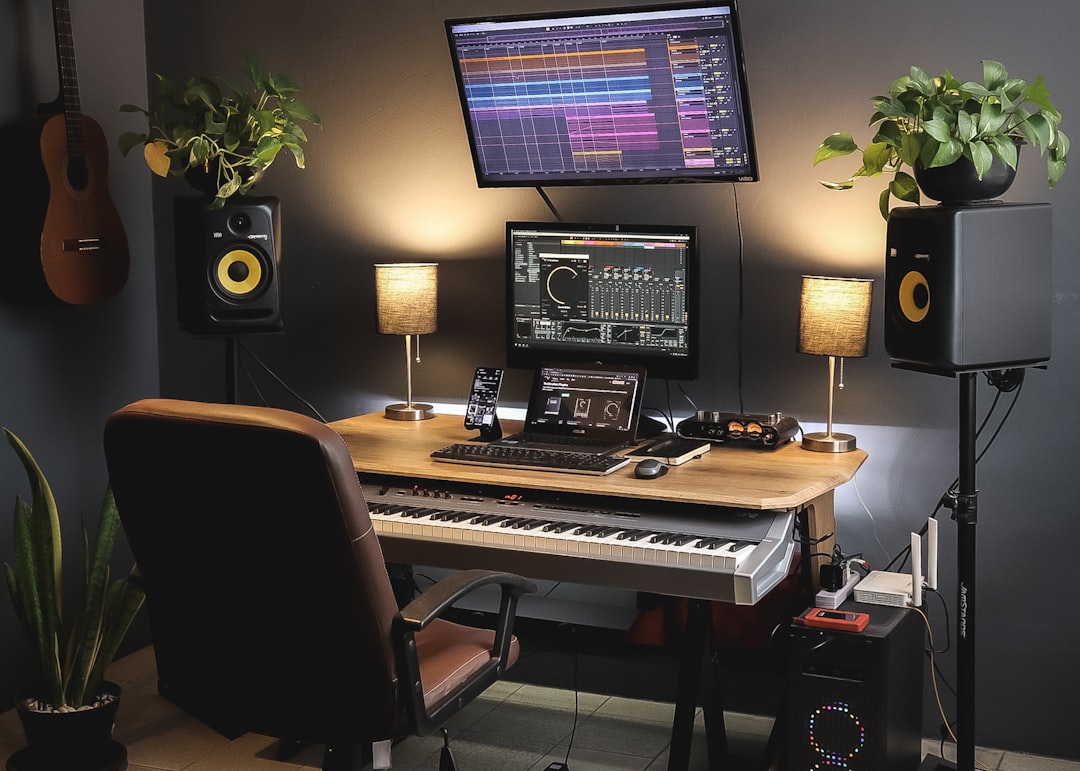
You do not need a splurge-band system to hear what is actually on a record. The best budget bookshelf speakers get the fundamentals right: a balanced midrange where voices and guitars live, a tweeter that is detailed without being harsh, and enough bass to feel the kick drum without boom. Below are seven affordable pairs, both powered and passive, chosen from brands with a long track record. We explain who each pair suits, what it needs to drive it, and the setup moves that make cheap speakers sound expensive.
Powered or passive on a budget?
A powered (active) pair has the amplifier built into one or both cabinets. You plug in a phone, computer, TV or a turntable with a built-in phono stage and you are done. That makes the total cost of a system lower, which matters at this price point. A passive pair needs a separate amplifier or receiver, but it gives you an upgrade path: swap the amp later, keep the speakers, or the reverse. If you already own an old receiver, a passive pair is the best value of all. Our guide to amps for record players covers the integrated amps that pair well with the passive picks here.
Starting from nothing? Our picks for the best record players with speakers pair a deck and powered speakers chosen to work together.
The best budget bookshelf speakers
Edifier R1280T
The Edifier R1280T is the default recommendation for a first pair of powered speakers. It pairs a 13mm silk dome tweeter with a 4-inch driver in MDF cabinets, has two analogue inputs so a turntable and a computer can stay connected at once, and puts bass and treble knobs on the side panel.
Best for: a desk or small bedroom system with no amp to buy.
- Pros: plug-and-play, two inputs, remote, tone controls.
- Cons: no Bluetooth on this version, and the small woofer limits deep bass in larger rooms.
Edifier R980T
The Edifier R980T is a step down in price and power, with 24W total output and a front-facing bass port in wooden cabinets. The front port is a quiet advantage: it is less fussy about sitting close to a wall than a rear-ported box.
Best for: the tightest budgets and near-field listening a metre or so away.
- Pros: very affordable, front port, two inputs, cables included.
- Cons: runs out of headroom at party volume; no remote.
Polk Audio T15
The passive Polk Audio T15 uses a 0.75-inch tweeter and a 5.25-inch driver and is often among the cheapest name-brand pairs you can buy. It is voiced to sound full at low volumes, which suits late-night listening, and it can be wall mounted.
Best for: anyone with a spare receiver who wants the lowest-cost proper stereo pair.
- Pros: rock-bottom price, warm and forgiving, wall-mountable.
- Cons: needs an amp; treble detail is modest next to the pricier picks.
Sony SS-CS5
The Sony SS-CS5 is unusual at this price for being a 3-way design, with a 3/4-inch super tweeter alongside a 1-inch tweeter and a woofer. That extra driver helps spread the treble across a wider listening area, so the sound changes less as you move around the room.
Best for: living rooms where people do not sit in one fixed sweet spot.
- Pros: wide, airy treble, compact, often discounted.
- Cons: passive, and relatively low sensitivity means it prefers a reasonably powerful amp.
Klipsch R-41M
The Klipsch R-41M pairs a 1-inch aluminium tweeter with Klipsch’s Tractrix horn and a 4-inch woofer. Its rated 90dB sensitivity means it gets loud from very little amplifier power, so even a small vintage receiver or a compact class-D amp can drive it comfortably.
Best for: rock, live recordings and anyone pairing a low-powered amp.
- Pros: efficient, lively and dynamic, easy to drive.
- Cons: the horn can sound bright in hard, echoey rooms; bass extension is limited (rated down to 68Hz).
Dayton Audio Classic B65
The Dayton Audio Classic B65 is a passive 2-way with a 6.5-inch woofer and a 1-inch soft dome tweeter. The bigger woofer moves more air than the 4-inch designs above, giving a fuller low end without adding a subwoofer.
Best for: bass-heavy genres in a medium room on a strict budget.
- Pros: large woofer for the money, soft dome tweeter, wall-mountable.
- Cons: larger cabinets; needs an amp and room to breathe from the wall.
ELAC Debut 2.0 B5.2
At the top of the budget band, the ELAC Debut 2.0 B5.2 uses a 1-inch cloth dome tweeter with a waveguide and a 5.25-inch aramid-fibre woofer. It is the most neutral, grown-up sounding speaker here, and it is the pair to buy if you want to keep it for many years and upgrade the amp around it.
Best for: listeners who want accuracy and plan to build a proper hi-fi over time.
- Pros: balanced, detailed, smooth treble, solid build.
- Cons: most expensive pick; appreciates a decent amp with some power in reserve.
Comparison table
| Product | Best for | Key feature |
|---|---|---|
| Edifier R1280T | Desk or bedroom, no amp | Powered, two analogue inputs |
| Edifier R980T | Tightest budget | Powered, front bass port |
| Polk Audio T15 | Owners of a spare receiver | Passive, warm at low volume |
| Sony SS-CS5 | Wide listening areas | Passive 3-way with super tweeter |
| Klipsch R-41M | Low-powered amps | Horn-loaded tweeter, 90dB sensitivity |
| Dayton Audio Classic B65 | More bass on a budget | 6.5-inch woofer |
| ELAC Debut 2.0 B5.2 | Long-term hi-fi upgrade path | Waveguide tweeter, aramid woofer |
How to choose
- Count the whole system cost. A cheap passive pair plus a new amp can cost more than a good powered pair. Budget for cables and stands too.
- Match sensitivity to power. Sensitivity tells you how loud a speaker plays from one watt. A higher figure, like the Klipsch, needs less amplifier; a lower figure needs more headroom to avoid clipping on loud peaks.
- Check impedance. Most budget passive speakers are around 6 to 8 ohms, which nearly any home amp handles. If your amp is very small, stick to 8-ohm, efficient designs.
- Think about the turntable. Most budget powered speakers have line inputs only, so a turntable needs a built-in or external phono stage. Our explainer on whether you need a phono preamp covers the difference between phono and line level. If you are buying separate speakers specifically for a turntable, see speakers for record players.
- Room size. 4-inch woofers suit desks and small rooms. For a living room, look at 5.25-inch or 6.5-inch woofers, or plan to add a subwoofer later.
Setup tips that cost nothing
Placement matters more than a price step. Form an equilateral triangle between the two speakers and your listening position, with the tweeters roughly at ear height. Pull rear-ported speakers at least a short distance from the wall to tame boomy bass, and keep them out of corners, which pile up low frequencies. Angle them slightly toward you. If a speaker sits on the same piece of furniture as a turntable, the vibration can feed back into the stylus, so separate them or use isolation; our studio guide to monitor isolation pads explains how decoupling tightens bass. Want more options above this price band? Compare these with our hub of the best bookshelf speakers.
FAQ
Are budget bookshelf speakers good enough for vinyl?
Yes. A well-made budget pair will reveal the warmth and detail of a good pressing. The bigger differences in a starter vinyl system usually come from the cartridge, the phono stage and speaker placement rather than the speaker price.
Do I need a subwoofer with budget bookshelf speakers?
Not for most music in a small room. If you listen to electronic, hip-hop or film scores in a larger space, a small sub can fill in the bottom octave. Powered pairs with a sub output make this easier.
Can I use studio monitors as budget bookshelf speakers?
You can. Monitors aim for a flatter response, which some listeners love and others find less flattering. Most lack consumer conveniences like remotes and Bluetooth, and they usually need line-level sources.



