
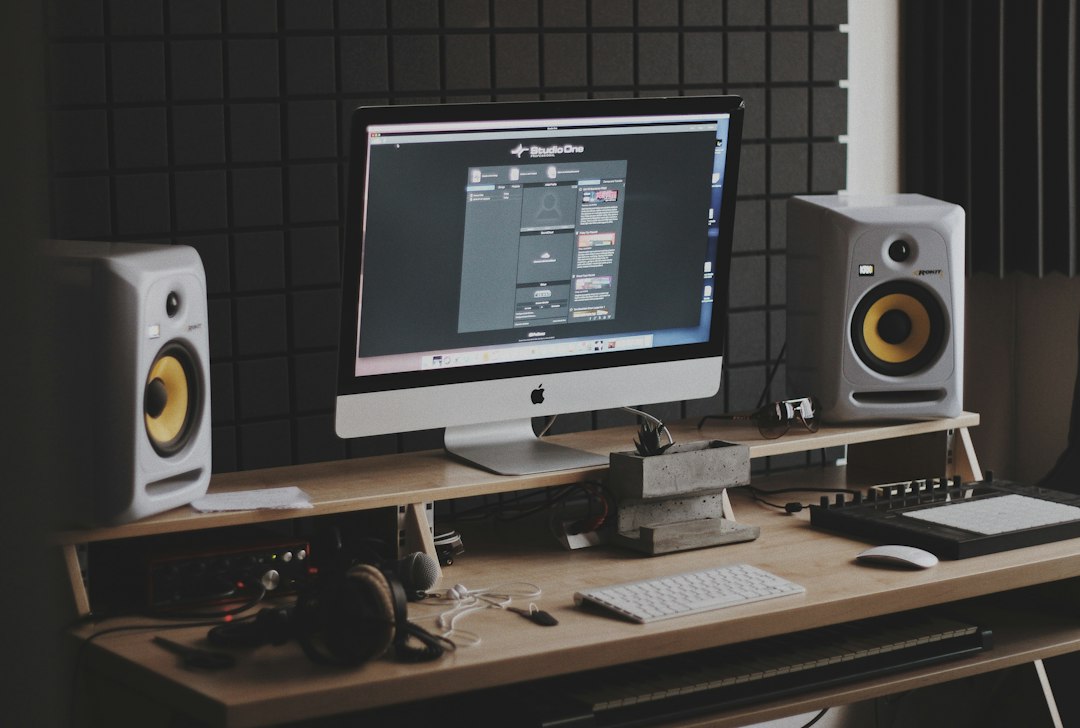
A powered speaker puts the amplifier where it does the most good: inside the cabinet, matched to the drivers it drives. That is why studio engineers have used active monitors for decades, and why the best powered bookshelf speakers have become the simplest route to genuinely good sound at home. You skip the separate amp and speaker cable, and many models add a phono stage for a turntable, Bluetooth for your phone and USB for a computer. This guide focuses only on active designs, compares their inputs, and explains which features matter for vinyl, desks and living rooms.
Why powered speakers make sense
In a passive system, one amplifier feeds a crossover inside each speaker that splits the signal between woofer and tweeter. In a powered speaker the designer knows exactly which drivers are being driven, so the amplifier and crossover can be tuned to them. Some models are bi-amped or tri-amped, with a separate amplifier channel for each driver, which tends to give cleaner dynamics because the bass is not stealing power from the tweeter on loud passages. The trade-off is flexibility: you cannot swap the amp later, and if the electronics fail the whole speaker needs repair. If you want to understand the same debate from the studio side, see our explainer on powered vs passive studio monitors.
The best powered bookshelf speakers
Kanto YU4
The Kanto YU4 is the easiest one-box answer for a turntable owner. It has a built-in phono preamp, Bluetooth, auto standby and a remote, so you can connect a record player without an internal phono stage directly and still stream from your phone.
Best for: a first vinyl system with no extra boxes.
- Pros: switchable phono input, Bluetooth, remote, compact.
- Cons: bass is limited in large rooms; the built-in phono stage is good rather than audiophile-grade.
Fluance Ai41
The Fluance Ai41 uses a 90W integrated amplifier, 5-inch woven glass fibre woofers and neodymium tweeters in wood cabinets. Fluance builds it with turntables in mind, and the larger woofers give it a fuller low end than 4-inch designs.
Best for: living rooms and turntables that already have a phono stage.
- Pros: full sound, braced MDF cabinets, Bluetooth, optical input and a sub out.
- Cons: no phono input, so a basic turntable needs an external preamp; larger footprint.
Edifier R1700BTs
The Edifier R1700BTs offers 66W of power, a 19mm silk dome tweeter, a 4-inch woofer, Bluetooth with aptX HD, dual RCA inputs and a subwoofer output with a built-in crossover. That sub out is the hidden value: add a sub later and the speakers hand off the deep bass automatically.
Best for: value seekers who want room to grow into a 2.1 system.
- Pros: aptX HD, two analogue inputs, sub out, remote.
- Cons: no phono stage or USB; the styling is traditional.
Audioengine A2+ (Gen 3)
The Audioengine A2+ Wireless is a small desktop pair with real wood cabinets, Bluetooth and a built-in 24-bit DAC over USB-C. Plug it into a laptop and the computer’s noisy headphone output is bypassed entirely.
Best for: desks, home offices and near-field listening.
- Pros: tiny footprint, USB DAC, solid warranty.
- Cons: small drivers limit bass and volume; not a living-room speaker.
Kanto ORA
The Kanto ORA is a 100W powered reference desktop speaker with Bluetooth, aimed at people who want a more detailed, studio-flavoured presentation than typical computer speakers. It slots in above the A2+ for desk listening.
Best for: producers and listeners who want monitor-like clarity on a desk.
- Pros: clear, focused sound, compact, Bluetooth.
- Cons: desktop-sized bass; you will want stands or pads to angle it toward your ears.
Klipsch R-51PM
The Klipsch R-51PM combines Klipsch’s horn-loaded tweeter with a switchable phono/line input (with a ground screw terminal), a 3.5mm input, USB digital input and Bluetooth. It is one of the few powered pairs with both a phono stage and USB.
Best for: turntable owners who also play music from a computer.
- Pros: phono, USB and Bluetooth in one, lively dynamics.
- Cons: horn tweeter can sound forward in reflective rooms.
Audioengine A5+ Wireless
The Audioengine A5+ Wireless steps up to 150 watts of built-in power with RCA and 3.5mm inputs plus Bluetooth. It is big enough to fill a living room and has a long reputation as a vinyl-system speaker.
Best for: living rooms and listeners who play at higher volumes.
- Pros: room-filling, well-built, simple to set up.
- Cons: no phono stage; heavier and larger than desktop picks.
Edifier S2000MKIII
The Edifier S2000MKIII is the splurge-leaning pick: a tri-amped design with planar diaphragm tweeters, 5.5-inch woofers, Bluetooth with aptX HD and line, optical and coaxial inputs. Planar tweeters are known for low distortion and fine detail at the top end.
Best for: detail-focused listening from both digital and analogue sources.
- Pros: tri-amped, optical and coaxial inputs, very detailed treble.
- Cons: no phono stage; highest price here.
Comparison table
| Product | Best for | Key feature |
|---|---|---|
| Kanto YU4 | First vinyl system | Built-in phono preamp + Bluetooth |
| Fluance Ai41 | Living rooms | 5-inch woofers, 90W amp |
| Edifier R1700BTs | Value with 2.1 upgrade path | Sub out, aptX HD |
| Audioengine A2+ (Gen 3) | Desks | USB-C DAC |
| Kanto ORA | Monitor-like desk listening | 100W reference design |
| Klipsch R-51PM | Turntable plus computer | Phono, USB and Bluetooth |
| Audioengine A5+ Wireless | Higher volumes | 150W built-in power |
| Edifier S2000MKIII | Detail and digital inputs | Tri-amped, planar tweeters |
How to choose the best powered bookshelf speakers
- Start with your sources. List everything you will plug in: turntable, TV, computer, phone, streamer. Then check the inputs. Optical suits TVs; USB suits computers; RCA suits turntables with a phono stage, streamers and CD players.
- Phono or line? A cartridge produces a tiny signal that needs RIAA equalisation and amplification. If your turntable has no built-in preamp, choose a speaker with a phono input like the Kanto YU4 or Klipsch R-51PM, or add an external one. Our phono preamp explainer walks through it.
- Bluetooth codec. Bluetooth is convenient, but it is compressed. aptX HD narrows the gap on compatible phones; for critical listening, use a wired input.
- Sub output. If you want deep bass, a sub out with a crossover makes integration easy. Pair it with one of the subs in our studio subwoofers guide.
- Room size. 3- to 4-inch woofers for desks, 5-inch and up for living rooms.
Placement for powered speakers
Treat them like studio monitors. Make an equilateral triangle with your seat, raise the tweeters to ear height, and keep rear ports off the wall. Keep the speakers off the same furniture as your turntable so bass vibration cannot feed back through the stylus. Remember that one speaker usually houses the amp and controls, so plan cable runs before you set up. If you are pairing speakers specifically with a turntable you already own, our guide to speakers for record players goes deeper, and if you want passive options or a cheaper shortlist, see the best budget bookshelf speakers.
FAQ
Can I connect a turntable directly to powered bookshelf speakers?
Only if either the turntable or the speakers has a phono preamp. Speakers like the Kanto YU4 and Klipsch R-51PM have a switchable phono input; others need a turntable with a built-in preamp or an external phono stage.
Do powered speakers sound better than passive ones?
Not automatically, but at modest budgets they often do, because the amplifier is matched to the drivers and you are not splitting the budget between an amp and speakers. Passive systems win on long-term flexibility.
Are powered bookshelf speakers the same as studio monitors?
They share the active design, but home speakers add Bluetooth, remotes and sometimes phono inputs, and they are often voiced to sound warmer. Studio monitors prioritise a flat response for mixing decisions.
