
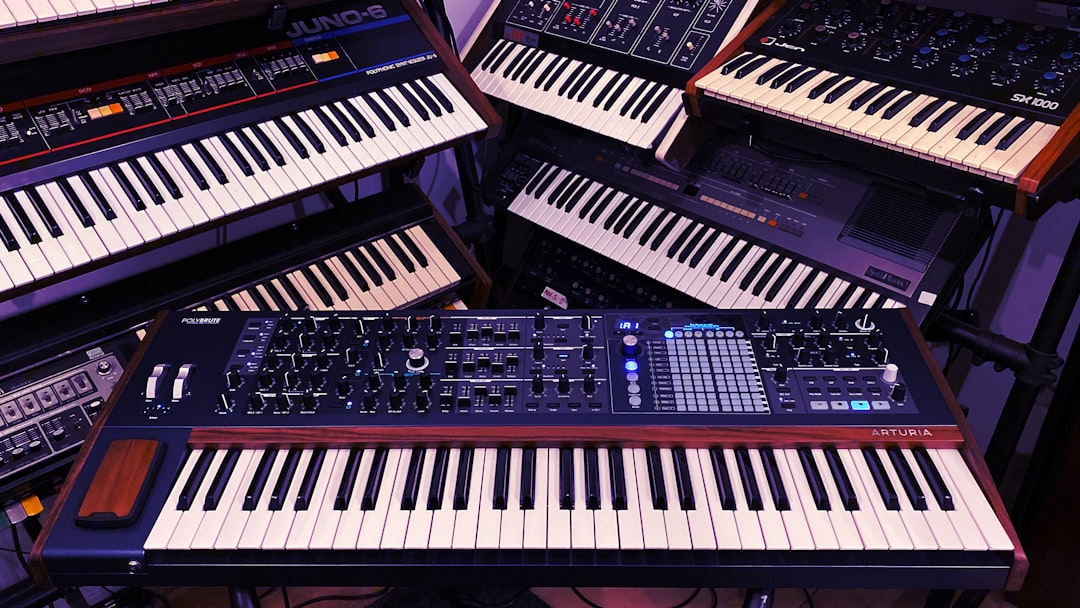
Writing a melody for a beat comes down to three things: choose a key and scale, find a short phrase that repeats and sticks, then shape it with rhythm and space so it sits around your drums instead of fighting them. You do not need theory training or expensive gear — a free DAW, a piano roll, and one good idea are enough to build a hook that carries a whole track.
This guide walks through the full process the way a working producer would explain it: setting your tempo and key, sketching the core motif, layering chords and counter-lines, programming drums and 808s underneath, adding swing so it grooves, and finally arranging everything into a beat that goes somewhere.
Violet Recording is reader-supported — we may earn a commission from links on this page, at no extra cost to you.
What you’ll need before you write a note
You can do all of this in almost any digital audio workstation — FL Studio, Ableton Live, GarageBand, or one of the free DAWs for beginners if you’re just starting. The list is short:
- A DAW with a piano roll (the grid where you draw notes).
- One melodic instrument to start — a piano, a soft synth, a pluck, or a bell. Keep it simple.
- A tempo. Most modern hip-hop and trap sits around 130–150 BPM (often felt as half that); lo-fi and R&B run slower. If you’re unsure, use our free metronome and BPM tools to lock a tempo before you commit.
- A rough idea of mood — dark, bright, sad, triumphant. That single word guides every note choice below.
Steps at a glance
- Set your tempo and pick a key and scale.
- Write a short 1–2 bar motif — the hook.
- Build chords underneath it.
- Add a counter-melody or second layer for movement.
- Program drums and an 808 that lock to the melody’s rhythm.
- Add swing and humanise the timing.
- Arrange it into an intro, verse, and hook.
Step 1: Pick a key and scale so every note fits
The fastest way to stop hitting “wrong” notes is to work inside a scale. Pick a root note — say A — and a scale that matches your mood. The natural minor scale is the workhorse of hip-hop, trap, and R&B because it sounds emotional and slightly dark. Major sounds happier and brighter; the harmonic minor adds a tense, cinematic edge that suits drill and darker trap.
Once you choose, say A minor, you only have seven notes to play with (A, B, C, D, E, F, G). Every one of them will sound “in key,” which means you can experiment freely without clashing. Many DAWs and MIDI plugins have a scale-highlight or scale-lock feature — turn it on and the piano roll dims the out-of-scale notes so you literally cannot go wrong. If you’re new to this, start there. It removes the biggest source of beginner frustration.
Step 2: Write the core melody for a beat that people remember
Here’s the mindset shift that matters most: a great hook is usually short. Think of the melodies you can hum from your favourite beats — most are one or two bars long and simply repeat. You are not writing a symphony; you are writing a phrase catchy enough to loop for three minutes.
Start by clicking in three to five notes over a single bar. Keep the range narrow — jumping all over the keyboard sounds busy and amateurish. Instead, move mostly by steps (neighbouring notes) with the occasional leap for drama. Leave gaps. The silence between notes is what gives a melody its rhythm and lets the drums breathe.
Two techniques instantly make a simple idea sound intentional:
- Call and response. Play a short phrase, leave a beat of space, then answer it with a variation. Question, then answer — it feels conversational.
- Repetition with a twist. Repeat your motif but change the last note or nudge one note up the scale on the second pass. Familiar enough to stick, different enough to stay interesting.
If you’re stuck staring at an empty grid, hum something out loud first and find those notes by ear, or draw in a random rhythm inside your scale and then edit the pitches until a shape emerges. Inspiration usually comes from editing, not from a blank page.
Step 3: Add chords to give your melody a home
A melody floating on its own feels thin. Chords are what give it weight and emotion. The simplest approach: take your scale and stack triads — the 1st, 4th, 5th, and 6th chords of a minor scale (in A minor that’s Am, Dm, Em, and F, and the more colourful C, G too) will cover most of what you hear on the radio.
Play a loop of two to four chords and let your melody sit on top. If a melody note sounds “off” against a chord, either move that note to a chord tone or change the chord — both are valid. Keep the chords low and simple; the melody should stay the star. A common, foolproof progression in minor is vi–IV–I–V feel (borrowed voicings aside), but honestly, loop any two chords that move you and build from there. For a deeper dive into how notes stack into harmony, our sound design hub has more on building tones and textures from scratch.
Step 4: Layer a counter-melody and pick your sounds
Once the main hook and chords feel right, add a second melodic layer that plays in the gaps of the first. This is where beats gain depth. A few reliable pairings: a mellow piano or Rhodes for the chords, a bright pluck or bell for the lead hook, and maybe a low sustained pad underneath for glue. When the lead rests, let the counter-line move — the two lines trade places so there’s always something happening.
The sound you choose matters as much as the notes. The exact same MIDI played on a warm piano versus a detuned synth feels like two different songs. This is the fastest place to level up a beat: instead of relying only on stock presets, pull in professionally-made melody loops, one-shots, and construction kits and either use them directly or re-chop them into something original. A subscription sample service like Splice gives you an enormous, searchable library of royalty-safe melodic loops you can drop straight into your session, filter by key and BPM, and flip into your own idea.
If you want to browse free options first, our roundup of the best free drum VSTs and the best beat-making apps both point to instruments and sound sources that cost nothing to start.
Step 5: Program drums and an 808 that lock to the melody
A melody only becomes a beat when the drums arrive. Start with the backbone: kick on beat one (and wherever the groove wants it), a snare or clap on beats two and four, and hi-hats keeping time on top. That’s the skeleton of nearly every hip-hop and trap pattern.
Then bring in the 808 — the deep, sliding sub-bass that defines modern beats. The golden rule: your 808 should follow the root notes of your chords, and it should never clash with the kick. Because the 808 and the kick occupy the same low frequencies, layer them carefully — either sidechain the 808 to duck under each kick, or place kicks in the gaps between 808 notes so the low end stays clean rather than muddy. Slide your 808 between notes (glide/portamento) for that signature trap movement, and tune it to your key so it reinforces the harmony instead of rumbling against it.
For hi-hats, this is where energy lives: program fast rolls, triplets, and the occasional stutter to push the beat forward. Vary the velocity so some hats hit harder than others — flat, identical hats are the number-one giveaway of a beginner pattern.
Step 6: Add swing and humanise the timing
Notes quantised perfectly to the grid sound stiff and robotic. Real grooves breathe. Two adjustments fix this:
- Swing. Most DAWs have a swing or groove percentage that nudges every other note slightly late. A touch of swing (roughly 8–20%) turns a mechanical pattern into something that bounces. Apply it to hi-hats and melody alike and listen for the shuffle.
- Velocity and micro-timing. Manually pull a few notes a hair ahead of or behind the beat and vary how hard each one hits. These tiny imperfections are what make a beat feel played rather than programmed.
Trust your ears here. If your head nods, the groove is working. If it feels rigid, add more swing or loosen the quantise.
Step 7: Arrange the loop into a finished beat
A four-bar loop is not a song. Arrangement is what turns your melody for a beat into something that holds attention from start to finish. Think in sections: an intro that introduces the melody with light drums, a fuller main section where the 808 and full drums drop in, a breakdown that strips back to just the melody or chords for contrast, and then a return to full energy.
The core trick is tension and release. Take elements away, then bring them back — muting the drums for two bars before a drop makes that drop hit twice as hard. Add small variations each time the loop repeats: a new hi-hat pattern, a filter sweep, an extra melody note, a vocal chop. Anything that stops the ear predicting exactly what comes next. Aim for two to three minutes of movement rather than one loop copied twelve times.
Turn your beat idea into a full original track
Sometimes you have a melodic idea in your head but you’re not ready to build every layer by hand — or you want a full arrangement fast to test whether the idea has legs. If that’s you, Solmi can turn a simple prompt or hook idea into a complete, original song you can then flip, sample, or use as a reference for your own production. It’s a quick way to hear where a melody could go before you commit hours to programming it.
Frequently asked questions
Do I need to know music theory to write a melody for a beat?
No. Turning on scale-lock in your piano roll keeps you in key automatically, so you can experiment by ear without hitting wrong notes. Learning a handful of chords and the difference between major and minor will speed you up, but plenty of hit producers write entirely by feel. Start making, learn the theory as questions come up.
How long should a beat melody be?
Keep the core idea short — one or two bars that repeat. The most memorable hooks are simple phrases you can hum. Build variety through arrangement (adding and removing layers, small changes each loop) rather than by writing a long, complicated melody that’s hard to follow.
Where can I get melody sounds and loops to start with?
You can begin with the stock instruments in your DAW or the free options in our beat-making apps guide. When you’re ready for a bigger, searchable library filtered by key and BPM, a sample service like Splice gives you royalty-safe melody loops and one-shots you can drop in and flip into original ideas.
Ready to keep building? Once your beat is done, learn how to start selling beats, or sharpen the low end and clarity with our mixing and mastering guides.



