
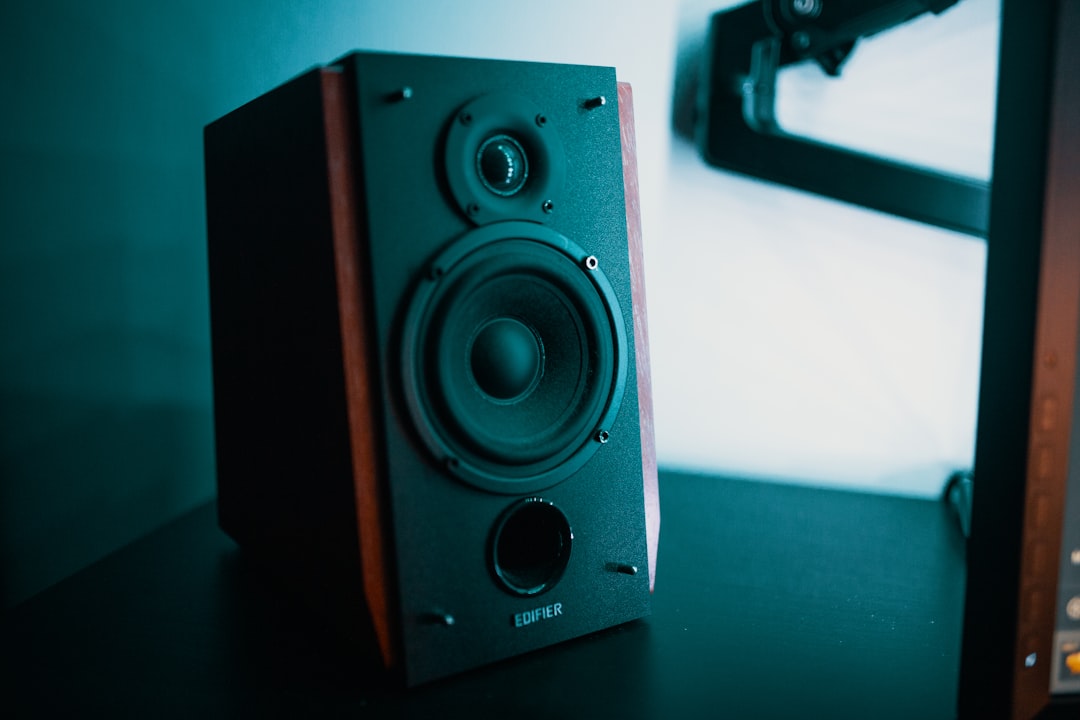
The best nearfield monitors for most home studios in 2026 are the Yamaha HS8 if you want a flat, honest reference, the Kali Audio LP-6 V2 if you want the most detail per dollar, and the Adam Audio T7V if you want a crisp top end that flatters vocals without lying to you. Those three cover the vast majority of bedroom and project studios, and every other pick below exists to fit a specific room, budget or workflow.
Violet Recording is reader-supported — we may earn a commission from links on this page, at no extra cost to you.
Below you’ll find the criteria that actually matter, a quick comparison table, and honest notes on where each monitor shines and where it doesn’t. If you’re still deciding between speakers and cans for mixing, read our take on studio monitors vs headphones for mixing first — and once you’ve bought, our guide on how to position studio monitors will save you more grief than any upgrade.
Quick comparison of the best nearfield monitors
| Monitor | Woofer | Best for | Price | Buy |
|---|---|---|---|---|
| Yamaha HS8 | 8″ | Flat, unforgiving reference | Check the current price on Amazon | Shop on Amazon |
| Kali Audio LP-6 V2 | 6.5″ | Best detail per dollar | Check the current price on Amazon | Shop on Amazon |
| Adam Audio T7V | 7″ | Airy, detailed top end | Check the current price on Amazon | Shop on Amazon |
| JBL 305P MkII | 5″ | Tight budget, small rooms | Check the current price on Amazon | Shop on Amazon |
| KRK Rokit 5 G4 | 5″ | Bass-forward, beat makers | Check the current price on Amazon | Shop on Amazon |
| PreSonus Eris E5 | 5″ | Cheapest solid entry | Check the current price on Amazon | Shop on Amazon |
| Focal Alpha 65 Evo | 6.5″ | Musical mid-range, step-up | Check the current price on Amazon | Shop on Amazon |
| Genelec 8020D | 4″ | Tiny rooms, endgame build | Check the current price on Amazon | Shop on Amazon |
What “nearfield” actually means for your studio
A nearfield monitor is designed to be heard from close up — typically 3 to 5 feet away, with the speakers and your head forming a near-equilateral triangle. The whole point is that at that distance you hear mostly the direct sound from the drivers and much less of your room’s reflections. That matters enormously in an untreated bedroom, because the room is usually the biggest problem in the signal chain, not the speakers. Sitting close lets a modest monitor punch above its price. If you want the deeper theory on placement distance, our piece on nearfield vs midfield monitors spells out where the line sits.
This is also why chasing an 8-inch woofer in a small room can backfire. A big driver moves more air and excites low-frequency room modes harder, so unless you have the space and some acoustic treatment, a 5-inch monitor often gives you a more honest low end. Match the woofer to the room, not to your ego.
How to choose nearfield monitors that suit your room
Before you compare brands, get clear on four things. Get these right and almost any monitor on this list will serve you well; get them wrong and even a Genelec will mislead you.
Room size and driver size. Rooms under about 10 by 10 feet are usually happiest with a 5-inch woofer. Between 10 and 14 feet, a 6.5-inch is the sweet spot. Reserve 7- and 8-inch monitors for larger, treated rooms or for genres where sub-bass detail is non-negotiable.
Tonal balance. A flat, revealing monitor like the HS8 exposes every flaw in your mix, which is exactly what you want for reference work — even if it isn’t fun to listen to. A gently voiced monitor like the KRK is more enjoyable but can flatter a mix that will fall apart elsewhere. Neither is wrong; know which you’re buying.
Ports and placement. Rear-ported monitors need breathing room behind them and will boom if shoved against a wall. Front-ported designs like the Kali LP-6 are far more forgiving when your desk sits against a wall — a real advantage in cramped setups.
Inputs and connectivity. Check your audio interface‘s outputs. Balanced XLR or TRS connections reject noise far better than unbalanced RCA, and every monitor here offers at least one balanced input. Match cables to the jacks you actually have.
The best nearfield monitors, reviewed
Yamaha HS8 — the honest reference standard
The white-cone Yamaha HS series is the closest thing the home-studio world has to a default, and the HS8 is the full-range version. It is deliberately flat and slightly clinical: it will not make your mix sound good, it will make it sound accurate, which is the entire job of a monitor. If your mixes travel badly to other systems, an HS8 usually tells you why. It needs a room with some space behind it and benefits from treatment. For smaller rooms, the HS5 sibling is the smarter buy. Shop on Amazon — Check the current price on Amazon.
Kali Audio LP-6 V2 — the value champion
Kali stunned the market by delivering near-boutique clarity at entry-level money, and the LP-6 V2 refines the formula. You get a detailed, well-imaged sound, a genuinely usable low end for a 6.5-inch box, and a set of boundary-EQ dip switches on the back that help it behave near walls or on a desk. It is the monitor we most often recommend to first-time buyers who want to grow into serious mixing without buying twice. Shop on Amazon — Check the current price on Amazon.
Adam Audio T7V — detail without harshness
Adam’s U-ART ribbon-style tweeter gives the T7V an airy, extended top end that reveals reverb tails and sibilance clearly, which makes it a favourite for vocal-led and electronic work. The 7-inch woofer digs lower than the 5-inch crowd without needing a subwoofer for most genres. It is rear-ported, so give it room to breathe. If you mix a lot of vocals, pair it with our guide to mixing vocals. Shop on Amazon — Check the current price on Amazon.
JBL 305P MkII — the budget over-achiever
JBL’s image-control waveguide gives the little 305P a wide, stable sweet spot that’s unusually forgiving of imperfect positioning. It’s clean, fairly flat, and absurdly cheap for what it does, which makes it the go-to for tight budgets and small rooms. The 5-inch woofer won’t shake the room, but in a nearfield setup that’s a feature, not a bug. Step up to the 306P MkII if you want a bit more low-end reach. Shop on Amazon — Check the current price on Amazon.
KRK Rokit 5 G4 — for bass and beats
The Rokit line is voiced with a confident low end and crisp highs — a fun, forward sound that beat makers and hip-hop and EDM producers love. The G4 adds a rear DSP screen with room-correction EQ presets, which genuinely helps tame that bass in a small space. Just be aware you’re mixing on a coloured monitor, so check your low end on headphones or in the car before you commit. Shop on Amazon — Check the current price on Amazon.
PreSonus Eris E5 — the cheapest sensible start
If your budget is genuinely tight, the Eris E5 is where honest monitoring begins. It’s flatter than you’d expect at the price, has acoustic-tuning controls on the back to fit it to your room, and gives you a reliable enough picture to learn on. It won’t reveal the last 5 percent of detail the pricier picks do, but it will never lie badly. A superb first pair for anyone building a studio on a budget. Shop on Amazon — Check the current price on Amazon.
Focal Alpha 65 Evo — the musical step-up
Focal’s Alpha Evo range brings a slice of the brand’s French pedigree to project-studio prices. The Alpha 65 Evo has a rich, musical mid-range and a smooth top that make long sessions easy on the ears while still being accurate enough to trust. It’s the pick for producers who found the Yamaha too clinical but don’t want to give up detail. Shop on Amazon — Check the current price on Amazon.
Genelec 8020D — small-room endgame
When space is the hard constraint and quality is not negotiable, the Genelec 8020D is a tiny 4-inch monitor with the imaging, build and neutrality of speakers many times its size. The die-cast aluminium enclosure and rounded edges reduce diffraction, and it pairs beautifully with a subwoofer if you ever add one. It costs more per inch of woofer than anything else here, but it’s a buy-once monitor for a treated nearfield desk. Shop on Amazon — Check the current price on Amazon.
Do you need a subwoofer or a second reference?
Most nearfield setups don’t need a subwoofer, and adding one to an untreated room usually creates more problems than it solves. If you mix bass-heavy genres and your room is treated, a matched sub can extend a 5-inch pair’s usable low end — but integrate it carefully or you’ll fool yourself into thin mixes. A cheaper, smarter reference is a good pair of reference headphones to check your low end and mono compatibility. Cross-referencing speakers and cans catches problems neither reveals alone, which is exactly why so many engineers keep both on the desk.
Whatever you buy, remember that placement and treatment move the needle more than the badge on the front. Symmetry, tweeters at ear height, and a bit of first-reflection absorption will do more for your mixes than upgrading from a good monitor to a great one. Get the basics right and any pick on this list will serve you for years.
Frequently asked questions
What size nearfield monitors should I buy for a small room?
For a room under roughly 10 by 10 feet, a 5-inch woofer is usually the sweet spot. Bigger drivers excite low-frequency room modes harder, so in an untreated small space a 5-inch monitor like the JBL 305P MkII or PreSonus Eris E5 often gives a tighter, more honest low end than an 8-inch would.
Are nearfield monitors better than headphones for mixing?
They’re complementary rather than competing. Monitors give a natural stereo image and let you feel the low end in the room, while headphones reveal fine detail and are immune to room problems. The best workflow uses both and cross-checks between them — see our full comparison of monitors vs headphones for mixing.
How far should I sit from nearfield monitors?
Aim for 3 to 5 feet, with your head and the two speakers forming an equilateral triangle and the tweeters at ear height. Sitting closer than that reduces room reflections in what you hear, which is the entire advantage of a nearfield setup. Our monitor positioning guide walks through the exact angles.
Want more gear guidance? Browse the full studio monitors category for setup guides, comparisons and reviews.



