
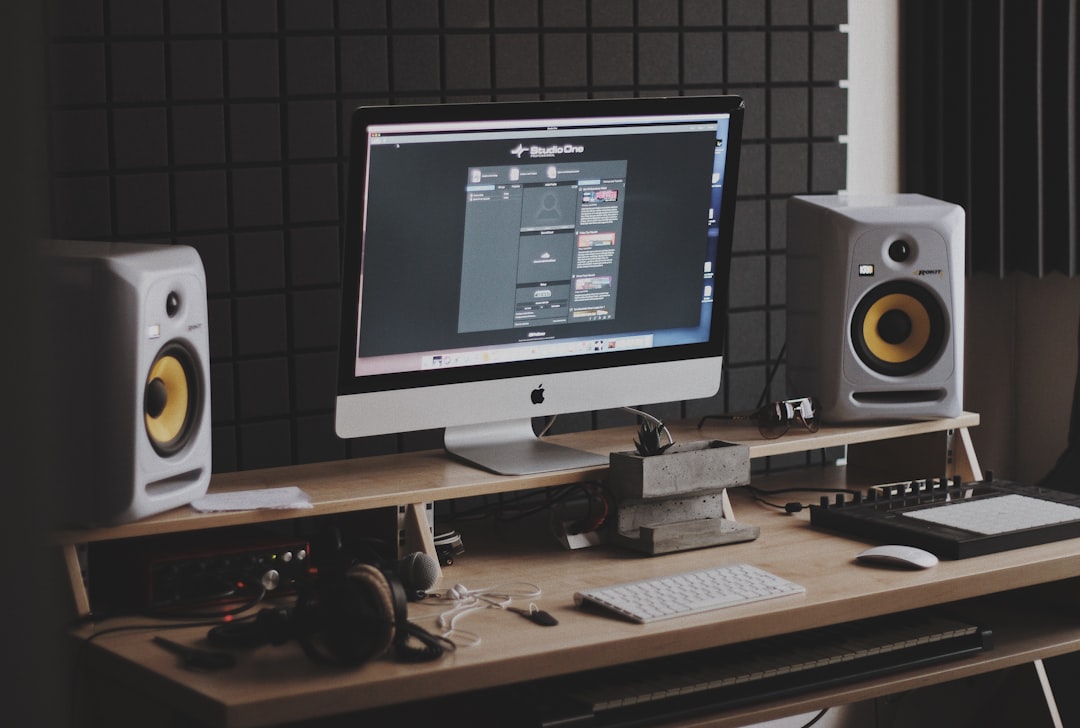
Short answer: are studio monitors worth it? For anyone who mixes, records, or edits audio regularly, yes — a decent pair of nearfield monitors is one of the highest-value upgrades you can make. They give you a flatter, more honest picture of your track than hi-fi speakers or laptop speakers ever will, which means the decisions you make actually translate to other systems. If you only listen for fun, though, you can happily skip them.
Violet Recording is reader-supported — we may earn a commission from links on this page, at no extra cost to you.
The quick verdict: are studio monitors worth it?
Studio monitors earn their keep the moment your listening turns into work — balancing a mix, comparing takes, checking a master. The gains are real but they are not magic, and they only show up once you pair the speakers with a treated (or at least sensibly arranged) room. Below is the fast version before we dig into who benefits, who doesn’t, and which pairs to buy.
| Pick | Best for | Why it stands out | Get it |
|---|---|---|---|
| PreSonus Eris E3.5 | The tightest budgets / small desks | Genuinely flat sound for the money in a compact 3.5-inch cabinet | Shop on Amazon |
| Yamaha HS5 | Reference-style honesty | Famously revealing, “if it sounds good here it sounds good anywhere” | Shop on Amazon |
| KRK Rokit 5 G4 | Beat-makers & bass-heavy genres | Strong low end plus onboard DSP room-tuning EQ | Shop on Amazon |
| Kali Audio LP-6 V2 | Best bang-for-buck all-rounder | Big, clean, detailed sound that punches well above its price | Shop on Amazon |
| JBL 305P MkII | Wide, forgiving stereo image | Image Control Waveguide gives a generous, stable sweet spot | Shop on Amazon |
| Adam Audio T5V | Detail & airy high end | Ribbon-style tweeter for a detailed, open top end | Shop on Amazon |
What a studio monitor actually does differently
The word “monitor” is the whole point. Consumer hi-fi speakers, Bluetooth boxes, and laptop drivers are voiced to flatter music — they boost the bass and treble so everything sounds exciting straight out of the box. That is great for listening and terrible for mixing, because those speakers are lying to you. If your monitors already exaggerate the bass, you’ll pull the bass down in your mix, and your track will sound thin everywhere else.
For plenty of people, a pleasing listening speaker is the right tool, and there is nothing wrong with keeping one for everyday playback alongside your monitors. If that is you, see our picks for the best bookshelf speakers.
If you mostly listen to music and don’t mix, that flattering voicing is a feature, not a flaw. Our guide to the best powered bookshelf speakers covers active hi-fi pairs that sound great straight out of the box.
Studio monitors aim for the opposite: a flat, uncoloured frequency response and a “nearfield” design meant to be heard from around a metre away, so you hear the direct sound of the speaker before the room smears it. That honesty is uncomfortable at first — mixes you thought were fine suddenly sound harsh or muddy — but that discomfort is the value. You’re finally hearing the problems that were always there. It’s the same reason a mirror in good lighting is more useful than a flattering one.
Monitors also tend to have faster transient response and less distortion at volume, so busy sections stay defined instead of turning to mush. If you want a deeper comparison of the two most common mixing tools, our guide on studio monitors vs headphones for mixing covers exactly when to reach for each.
Who studio monitors are genuinely worth it for
Be honest about how you use sound, because that decides everything.
You mix or master your own music. This is the clearest yes. Flat monitoring is the foundation every other mixing decision sits on. Trying to balance a track on coloured speakers is like painting in tinted glasses — see our beginner’s guide to mixing your first song for how monitoring feeds into that workflow.
You record vocals or instruments and need to hear the result. Comparing takes, spotting a boomy room, checking a mic choice — all easier on honest speakers.
You’re a podcaster, streamer, or video editor who cares about audio. Even a small pair helps you catch harshness, plosives, and level swings before your audience does.
You want to learn. Nothing trains your ears faster than a reference you can trust. Every hour on flat monitors makes you a better engineer.
When studio monitors are NOT worth it (yet)
Skipping monitors is the right call more often than gear marketing admits. Studio monitors are not worth it if any of these describe you:
- You only listen, never mix. If music is purely for enjoyment, buy nice hi-fi or headphones instead — flat response isn’t fun, it’s a work tool.
- Your room is completely untreated and you can’t change that. Monitors are far more room-dependent than headphones. In a bare, boomy box, a good pair of headphones can genuinely out-perform speakers. Start with our acoustic treatment guide before spending big.
- You mix at night and can’t play out loud. Speakers you can’t turn up don’t help. Headphones win here.
- Your budget is truly tiny. A poor pair of speakers plus a bad room is worse value than one good pair of reference headphones. See what reference headphones are to understand the alternative.
For many bedroom setups the smartest answer is “both, eventually” — headphones first for detail and quiet work, monitors added later for the wide, natural stereo image and physical low end that headphones can’t reproduce.
What it costs, and the honest price bands
Prices are approximate and current at the time of writing, so always check the live price before you buy — and remember most monitors are sold as singles, so a stereo pair costs double the sticker. Entry-level active nearfields run roughly $100–200 per speaker, and that band is where most home recordists should start. Step up to roughly $250–400 each and you get bigger, cleaner low end and better tweeters; serious mid-tier reference monitors climb to $500+ each, with mastering-grade pairs well beyond that.
Don’t blow the whole budget on the speakers themselves. A modest pair in a treated room beats an expensive pair in an untreated one every time, so set aside some money for a couple of acoustic panels and decent stands. That allocation is the single thing most first-time buyers get wrong.
The best studio monitors that are worth the money
Every pair below is a real, widely-used model at a home-studio price. Buy them in pairs (some are sold as singles), and remember the room and placement matter as much as the speaker itself. Check the current price on Amazon for each — bands shift and sales are common.
PreSonus Eris E3.5 — the honest entry point
If you’re not sure monitors are for you, this is the low-risk way to find out. The 3.5-inch woofers won’t shake the room, but the tuning is impressively flat and neutral for the price, and they fit on a cramped desk. A superb first taste of real monitoring. Shop on Amazon — Check the current price on Amazon.
Yamaha HS5 — the modern reference classic
The white-cone HS series earned its reputation by being unforgiving. It won’t glamorise your mix, which is exactly why so many engineers trust it as a translation reference. Pair it with a subwoofer or check bass elsewhere, as the 5-inch woofer is light on deep low end. Shop on Amazon — Check the current price on Amazon.
KRK Rokit 5 G4 — for bass-forward genres
Hip-hop, EDM, and electronic producers love the Rokit’s confident low end, and the G4 adds a rear-panel DSP with EQ presets to help tame a difficult room. Just learn its character so you don’t over-compensate. Shop on Amazon — Check the current price on Amazon.
Kali Audio LP-6 V2 — the value champion
Hard to beat for detail and low-end extension at the price. The LP-6 gives you a big, clean sound and useful boundary-EQ dip switches on the back to match desk or wall placement. If you want one recommendation for most people, this is it. Shop on Amazon — Check the current price on Amazon.
JBL 305P MkII — the forgiving sweet spot
JBL’s Image Control Waveguide spreads the sweet spot wider than most, so you’re not glued to one exact head position. Clean, detailed, and easy to live with for long sessions. Shop on Amazon — Check the current price on Amazon.
Adam Audio T5V — detail on a budget
The U-ART ribbon-style tweeter is the headline: it delivers an airy, detailed top end that’s great if your work lives or dies on the high frequencies. A strong value pick in the step-up bracket. Shop on Amazon — Check the current price on Amazon.
Getting your money’s worth: room, placement, and calibration
Here’s the part gear reviews skip: a budget pair set up well beats a pricier pair thrown against a wall. The speaker is only half the system — the room is the other half. Before you spend more on monitors, spend attention on how you position them.
Form an equilateral triangle with your two speakers and your head, angle them in toward your ears, and get the tweeters at ear height. Keep them off the wall to reduce bass build-up, and use isolation pads or stands to stop the desk from resonating. Our walkthrough on how to position studio monitors has the exact measurements, and nearfield vs midfield monitors explains why nearfields suit small rooms. Do that groundwork and even budget monitors will reward you — skip it and even great ones will mislead you.
Studio monitors vs the alternatives, at a glance
| Option | Strengths | Weaknesses | Best when |
|---|---|---|---|
| Studio monitors | Natural stereo image, real low-end feel, flat reference | Room-dependent, need volume, cost more with treatment | You mix out loud in a workable room |
| Reference headphones | Room-proof, quiet, detailed, cheap to start | Unnatural stereo, ear fatigue, weak translation alone | Untreated room, night work, tight budget |
| Hi-fi / consumer speakers | Fun, exciting, great for listening | Coloured, hyped bass/treble, dishonest for mixing | You just want to enjoy music |
The ideal home setup ends up being monitors and headphones, cross-checking each other, with a phone or car as a final reality check. But if you can only buy one thing today, base it on your room and your hours — not on which looks best on the desk. For the wider picture, see our budget home studio guide and the essential gear checklist.
Frequently asked questions
Are cheap studio monitors worth it, or a waste of money?
Cheap monitors like the PreSonus Eris E3.5 or Kali LP-6 are absolutely worth it, provided you set them up properly. A well-placed budget pair in a lightly treated room beats an expensive pair in a bad one. Spend on room basics before you spend on higher-end speakers.
Can I mix on headphones instead of studio monitors?
Yes, and modern headphones plus correction software have made headphone-only mixing very viable, especially in untreated or noise-sensitive rooms. The catch is stereo width and low-end feel translate differently, so cross-check on other systems. Our monitors vs headphones guide covers the trade-offs in full.
Do I need acoustic treatment to make studio monitors worth it?
You don’t need a fully treated studio, but you do need to manage the worst reflections and bass build-up, or the monitors will show you the room more than the mix. Even a few panels and smart placement make a big difference — start with our acoustic treatment for home studios guide.
Want more gear buying help? Browse the full studio monitors category for setup guides, comparisons, and reviews.



