
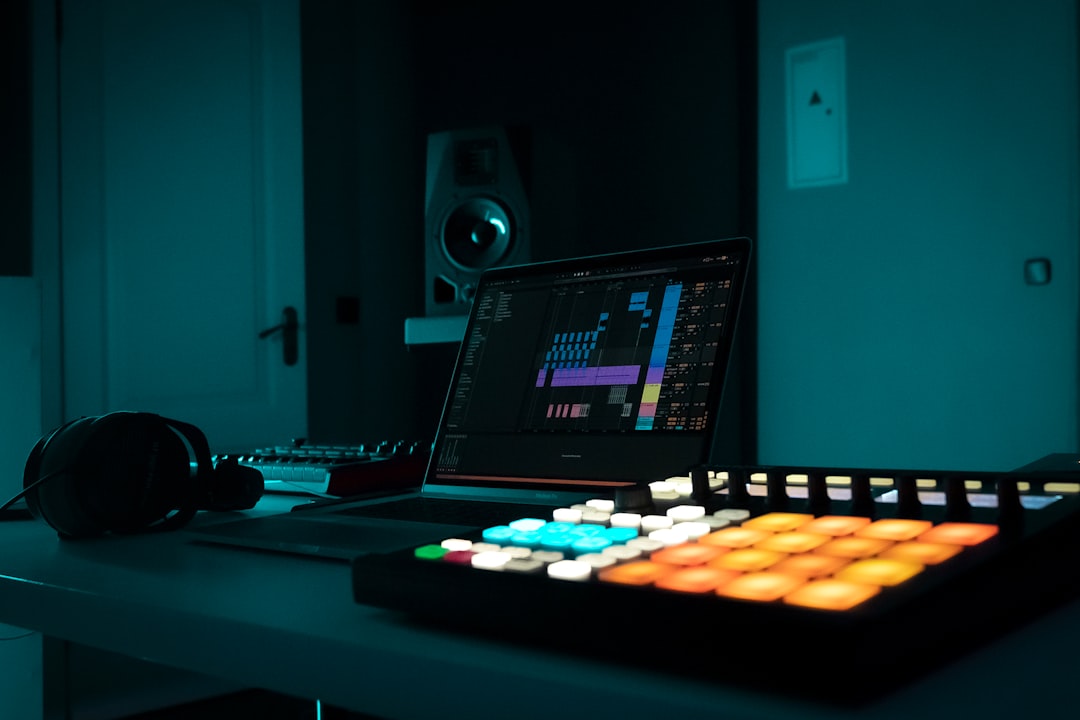
A good portable audio interface is the one you’ll actually carry: bus-powered so it runs off a single USB cable, small enough to slide into a backpack pocket, and rugged enough to survive a train, a hotel desk, or a friend’s spare room. If you record vocals, guitars, podcasts or field sketches away from a fixed studio, the best pick is the one that gives you clean preamps and low latency without a wall wart or a mixer. Below we compare our favourites across price, connectivity and use case, and tell you which one to buy for your setup.
Violet Recording is reader-supported — we may earn a commission from links on this page, at no extra cost to you.
Quick picks: the best portable audio interfaces at a glance
If you just want the short answer: the Focusrite Scarlett 2i2 (4th Gen) is the best all-rounder for most people, the MOTU M2 wins on raw audio quality and metering, and the Audient EVO 4 is the smart budget buy. Prefer analogue character? Grab the Universal Audio Volt 2. Recording straight into a phone or iPad? The IK Multimedia iRig Pro Duo I/O is built for it.
| Interface | Best for | Inputs / Outputs | Bus-powered? | Price |
|---|---|---|---|---|
| Focusrite Scarlett 2i2 (4th Gen) | Best overall | 2 in / 2 out | Yes (USB-C) | Check the current price on Amazon |
| MOTU M2 | Best audio quality | 2 in / 2 out | Yes (USB-C) | Check the current price on Amazon |
| Audient EVO 4 | Best budget | 2 in / 2 out | Yes (USB-C) | Check the current price on Amazon |
| Universal Audio Volt 2 | Best analogue character | 2 in / 2 out | Yes (USB-C) | Check the current price on Amazon |
| IK Multimedia iRig Pro Duo I/O | Best for phones / iPad | 2 in / 2 out | Yes (USB / battery) | Check the current price on Amazon |
| Apogee Duet 3 | Best premium | 2 in / 4 out | Yes (USB-C) | Check the current price on Amazon |
| Behringer U-Phoria UMC202HD | Cheapest usable option | 2 in / 2 out | Yes (USB) | Check the current price on Amazon |
How to choose a portable audio interface
“Portable” is doing a lot of work in that phrase, so it helps to be clear about what actually matters when you’re recording away from a desk. Here’s what an honest engineer would tell you to weigh up before you spend anything.
Bus power is non-negotiable. A truly portable interface draws all its power from the USB cable that carries your audio. The moment a box needs a separate power adapter, you’ve added another thing to pack, another plug to find, and a reason to leave it at home. Every interface on this list runs bus-powered over a single cable — that’s the whole point.
Count your inputs honestly. Two combo inputs (XLR for a mic, 1/4″ for a guitar or line source) covers the vast majority of mobile work: a solo vocal, a guitar DI, an interview with two mics, a podcast with a co-host. Only step up to four inputs if you genuinely track a small band or a multi-mic setup on the road, because more channels means a bigger, heavier box. For most people, two is the sweet spot between capability and pocketability.
Preamp gain range matters for dynamic mics. If you record with a low-output dynamic like a Shure SM7B, you need a preamp with plenty of clean gain — roughly 60 dB or more — or you’ll be fighting hiss. Interfaces like the MOTU M2 and UA Volt 2 have generous headroom; the Volt even includes a “76”-style preamp mode for extra colour. If you’re on a condenser, almost anything here has enough gain, and you’ll want to confirm the interface supplies phantom power, which they all do.
Latency and drivers. Portable doesn’t mean sluggish. What you feel when monitoring yourself in real time is round-trip latency, and it depends on the interface’s drivers and your buffer settings. All of these offer near-zero-latency direct monitoring so you can hear yourself without waiting on the computer. If you want the background on why this happens, our guide to audio latency explains it in plain English.
Connections and adapters. Modern interfaces use USB-C, which is great for current laptops, tablets and phones — but check what cables come in the box and whether you’ll need an adapter for older machines. If you want to record into an iPhone or iPad, make sure the interface is explicitly class-compliant with iOS, because not all of them are.
Build quality. A portable interface lives a harder life than a studio one. Metal chassis, recessed knobs and a firmly attached USB port all pay off when the thing is rattling around a bag. This is one area where the cheapest options cut corners.
The best portable audio interface for most people: Focusrite Scarlett 2i2 (4th Gen)
The Scarlett 2i2 has been the default recommendation for home and mobile recording for years, and the 4th generation keeps it there. You get two clean combo inputs, USB-C bus power, and Focusrite’s “Air” mode for a brighter, more open sound on vocals and acoustic instruments. The 4th Gen adds an “Auto Gain” feature that sets your levels for you — genuinely handy when you’re setting up fast in an unfamiliar room — and a clip-safe mode that catches overloads. It’s compact, sturdy, and works on Mac, Windows and iPad. For a fuller breakdown, see our Focusrite Scarlett 2i2 4th Gen review.
Who it’s for: almost everyone. Singer-songwriters, podcasters, guitarists and producers who want one dependable box that just works. Shop on Amazon
Best audio quality on the road: MOTU M2
If you care most about how your recordings sound and how easily you can set levels, the MOTU M2 is hard to beat at its price. Its converters are class-leading for a bus-powered two-channel box, and the standout feature is a full-colour LCD meter on the front that shows your input and output levels far more precisely than a couple of LEDs ever could. That metering alone makes gain-staging on a strange desk much less of a guessing game. It’s USB-C, bus-powered, and includes loopback for streaming and podcasting.
Who it’s for: producers and mixers who want the cleanest capture and the best visual feedback in a genuinely portable form. If you’re weighing up how clean converters and settings like sample rate and bit depth affect your recordings, the M2 gives you the quality headroom to make the most of it. Shop on Amazon
Best budget portable audio interface: Audient EVO 4
Audient built its reputation on high-end consoles, and the EVO 4 pushes some of that pedigree into a tiny, affordable, bus-powered box. It has two inputs, USB-C, and a clever “Smartgain” feature that listens to your source and sets the preamp level automatically across one or both channels — brilliant when you’re recording an interview and don’t want to fuss. The build is plastic rather than metal, but it’s light, small and sounds well above its price. This is the interface to buy when the budget is tight but you still want something you won’t outgrow in a month.
Who it’s for: beginners, students, and anyone who wants a capable travel interface without spending much. It pairs nicely with a budget condenser mic for a complete starter mobile rig. Shop on Amazon
Best for analogue warmth: Universal Audio Volt 2
The Volt 2 is Universal Audio’s most accessible interface, and its party trick is a switchable “Vintage” preamp mode modelled on the classic UA 610 tube circuit. Flip it on and vocals and guitars pick up a subtle, pleasing thickness that’s difficult to get from a clean interface. Under that it’s a solid, well-built two-in/two-out USB-C box with plenty of gain — enough to drive most dynamic mics comfortably. Build quality is excellent, with a reassuringly solid metal chassis that suits life on the move.
Who it’s for: vocalists, guitarists and podcasters who want a bit of character baked in at the source rather than added later in the mix. Shop on Amazon
Best for recording into a phone or iPad: IK Multimedia iRig Pro Duo I/O
Most interfaces here work with an iPad if you add the right adapter, but the iRig Pro Duo I/O is designed from the ground up for mobile recording. It’s genuinely tiny, connects to iPhone, iPad, Android and computers, and can even run on AA batteries when there’s no USB power to be had — the definition of grab-and-go. Two combo inputs with phantom power mean you can record two mics or a mic and a guitar directly into your phone, then walk away. MIDI I/O is built in too, which is rare in something this small.
Who it’s for: mobile journalists, buskers, songwriters catching ideas anywhere, and anyone whose main “computer” is a phone or tablet. If you’re deciding between this route and a simpler all-in-one mic, our USB mic vs audio interface guide is worth a read first. Shop on Amazon
Best premium portable interface: Apogee Duet 3
If money is less of a constraint and you want boutique-grade conversion in a slim travel package, the Apogee Duet 3 is the one to covet. Apogee’s converters are trusted in professional studios, and the Duet 3 puts that quality into a low-profile, bus-powered USB-C unit with a single control knob and touchpad. It uses a breakout cable for its two inputs and four outputs, which is the trade-off for keeping the main body so thin. It’s overkill for casual podcasting, but for a professional who records on the road and won’t compromise on sound, it’s a joy.
Who it’s for: working musicians, mix engineers and audiophile home recordists who want reference-grade capture in a bag-friendly shell. Shop on Amazon
Cheapest option that’s still worth owning: Behringer U-Phoria UMC202HD
When the budget is truly rock-bottom, the Behringer U-Phoria UMC202HD delivers two Midas-designed preamps, phantom power and 24-bit conversion for less than almost anything else on the market. It’s bus-powered and small enough to travel. You give up the polish, the auto-gain conveniences and the premium metering of the pricier boxes, and the drivers aren’t quite as slick — but as a first interface or a knockaround backup you don’t mind risking in a bag, it punches well above its cost.
Who it’s for: absolute beginners, or anyone who wants a cheap second interface for travel so their main unit stays safe at home. Shop on Amazon
Getting the most from your portable setup
Whichever interface you land on, a few habits make mobile recording far more reliable. Pack a spare USB-C cable and any adapter your specific laptop or phone needs — a dead cable will end a session faster than anything else. Learn your interface’s direct-monitoring switch so you can hear yourself with zero latency in rooms with no acoustic treatment. And set your gain with the meters, not by ear: aim for peaks well below clipping, because you can’t undo a distorted take. Our guide to setting up an audio interface walks through the whole first-time process, and you’ll find more picks in the audio interfaces category.
Frequently asked questions
What makes an audio interface “portable”?
The key feature is bus power — the interface runs entirely off the single USB cable that also carries your audio, so there’s no separate power adapter to pack or plug in. Beyond that, portability comes down to size and weight, a rugged chassis that survives being knocked around in a bag, and connectivity that works with laptops and, ideally, phones or tablets. Every interface on this list is bus-powered and compact enough to travel comfortably.
Can I use a portable audio interface with my phone or iPad?
Often yes, but check first. The interface needs to be “class-compliant” with iOS or Android, and you’ll usually need the correct USB-C or Lightning adapter and cable. Some units, like the IK Multimedia iRig Pro Duo I/O, are designed specifically for mobile use and even run on batteries. Others, like the Scarlett 2i2, work with an iPad using the right adapter but weren’t built primarily for phones. If mobile recording is your main use case, buy an interface that lists iOS support explicitly.
Do I need two inputs or is one enough?
One input is fine if you only ever record a single source at a time — a solo vocal, or a guitar DI. But two inputs cost little more and open up interviews, podcasts with a co-host, stereo recording, and tracking a vocal and instrument together. For a portable interface that has to cover whatever the day throws at it, two combo inputs is the most flexible choice, which is why nearly every pick here has them.



