
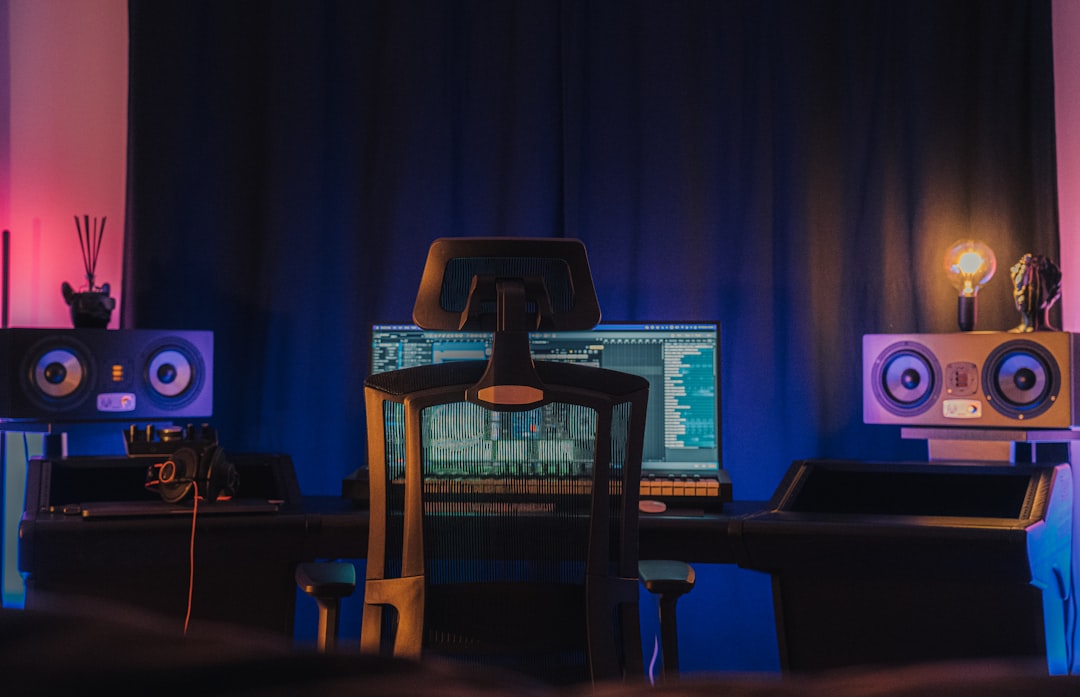
To make your first beat, you only need four things: a tempo, a drum pattern, a bassline, and a short melody arranged into a loop you can build on. Open any DAW or beat-making app, set the tempo somewhere between 80 and 150 BPM, program a kick, snare, and hi-hat over one or two bars, drop an 808 or bass note under it, and add a simple chord or melody on top. That eight-bar loop is a beat. Everything after that — swing, layering, arrangement, mixing — is polish. This guide walks you through the whole process the way a working producer would explain it to a friend.
Violet Recording is reader-supported — we may earn a commission from links on this page, at no extra cost to you.
What you’ll need to make your first beat
You don’t need a studio full of gear. A laptop or phone, a pair of headphones, and one piece of software is enough to finish a real track today. Here’s the short list:
- A DAW or beat app. On a computer, FL Studio, Ableton Live, GarageBand, or a free option works fine — see our roundup of the best free DAWs for beginners. On a phone, check the best beat-making apps. If you’re deciding which platform suits rap and trap, our guide to the best DAW for hip-hop breaks it down.
- Sounds. Every DAW ships with stock drums and instruments. That’s plenty to learn on. Later you’ll want your own kicks, snares, and one-shots — more on that below.
- Headphones or monitors. Anything you can hear detail on. You’re listening for whether the kick and bass sit together.
- A rough idea of the vibe. Slow and moody? Fast and aggressive? Pick a reference song you love and aim in that direction.
Step one: set your tempo and lay the grid
Tempo is measured in beats per minute (BPM), and it sets the entire mood of a track. Trap and modern hip-hop usually live around 130–150 BPM but feel slower because the drums are written in half-time. Boom-bap and lo-fi sit around 80–95 BPM. House and pop land near 120–128. If you’re unsure, start at 140 BPM for a trap feel or 90 for something laid-back, and adjust by ear. Not sure what tempo your reference track uses? Run it through our free BPM finder and metronome tools to lock in a starting number.
Once the tempo is set, most beat software shows you a step sequencer or a piano roll snapped to a grid. The grid is divided into bars, and each bar into 16 steps (sixteenth notes). Those 16 boxes are where your drums go. Understanding that grid is 80% of drum programming — everything you place is just a decision about which of those steps to fill.
Step two: program the drums that carry the beat
Drums are the skeleton. Build them in a specific order so each piece has room:
The kick and snare set the pulse
Start with the kick on step 1 — the downbeat. Then place your snare (or clap) on the backbeat: step 5 and step 13 in a 16-step bar, which is beats 2 and 4. That kick-on-1, snare-on-the-2-and-4 relationship is the heartbeat of almost every popular genre. Play it back. Even with nothing else, it should already feel like music. From there, add a second or third kick before the snare to create a bounce — a common trap move is a kick on step 1 and again on step 7 or 8, right before the snare lands.
Hi-hats create the movement and energy
Hi-hats fill the space between kick and snare. Lay a closed hat on every eighth note (steps 1, 3, 5, 7, 9, 11, 13, 15) for a steady pulse. To get that signature trap energy, add faster hi-hat rolls — double or triple hits crammed into one or two steps, sometimes as fast as 32nd or 64th notes. Vary the velocity (how hard each hat hits) so the pattern breathes instead of sounding robotic. An open hi-hat dropped on an off-beat adds a nice lift. If your stock hats sound thin, a good drum plugin helps — see our picks for the best free drum VSTs.
Percussion and fills add character
Once the core groove works, sprinkle in extras: a rimshot, a shaker, a tambourine, or a one-off percussion hit at the end of a bar. Use these sparingly. A fill — a quick snare roll or a reversed cymbal in the last beat of a four-bar phrase — signals to the listener that a new section is coming.
Step three: add the 808 and bassline
The 808 is the deep, sustained bass sound that defines modern hip-hop, trap, and a lot of pop. It’s both a kick drum and a bass note at once, and getting it right is what separates a beat that “knocks” from one that sounds flat. Load an 808 sound (every beat app has one) into the piano roll and write your bass notes.
Two rules make 808s work. First, tune the 808 to the key of your melody — an out-of-key 808 clashes with everything and is the most common beginner mistake. If your melody is in F minor, your 808 should mostly play F and other notes from that scale. Second, let the 808 follow the kick, not fight it. Line the start of each 808 note up with a kick hit so they punch together. If the kick and 808 land on different steps, they can cancel each other out and lose all their weight. Keep the pattern simple at first — long, sliding notes on the root of your key will already sound professional. Glide or portamento between notes gives you that smooth 808 slide you hear on the radio.
Step four: add swing so the beat feels human
A pattern programmed perfectly on the grid can sound stiff and mechanical. Swing (sometimes called groove or shuffle) nudges certain notes slightly late, giving the beat a human, head-nod feel. Most DAWs have a swing knob — try 10–20% and listen to how the hi-hats and snares start to bounce. Boom-bap and lo-fi lean hard on swing; that lazy, behind-the-beat drag is the whole vibe. Cleaner styles like pop or EDM use less. Adjusting note velocity — making some hits softer and some harder — does the same job and makes the groove feel played rather than typed in.
Step five: add melody, chords, and texture
With the rhythm section done, add the musical layer that gives the beat emotion. You have two easy routes. The first is to play chords or a melody yourself using a piano, synth, or bell sound — a simple four-chord loop in a minor key covers a huge amount of ground, and you don’t need to be a trained pianist to find four notes that sound good together. The second is to build around a loop or a sample.
This is where a sample library earns its keep. Instead of composing from a blank page, you can drop in a melody loop, a vocal chop, or a texture that already sounds finished and write your drums and 808 around it. A subscription service like Splice gives you a huge, royalty-cleared catalogue of loops and one-shots you can audition in key and at your project tempo. Chop the loop, pitch it to your key, layer it with your own drums, and you’ve got an arrangement most people would never guess started from a preset.
Whichever route you take, keep the layers separated by frequency: bass low, drums in the middle, melody and texture up top. If two sounds occupy the same range and fight, mute one or filter it — clarity beats clutter every time. When your loop is solid, our beginner’s guide to mixing your first song covers how to balance levels so nothing masks anything else.
Step six: arrange the loop into a full song
A great eight-bar loop isn’t a song yet — it’s the raw material. Arrangement is where you turn it into something with a beginning, middle, and end. A simple, reliable structure for a beat is:
- Intro (4–8 bars): strip it back. Melody alone, or drums alone, so the listener eases in.
- Verse (16 bars): the full loop, but leave a little space for a vocalist to sit in.
- Chorus / hook (8 bars): the biggest, fullest section. Add a counter-melody, more percussion, or an extra 808 layer to lift the energy.
- Breakdown or bridge: pull elements out to create contrast before the last chorus hits harder.
- Outro: fade the elements back down to end cleanly.
The trick to keeping a listener engaged is subtraction and addition. Mute the hi-hats for a bar. Drop everything but the 808 for two beats before the hook. Add a new melodic layer when the chorus arrives. These small moves create the tension and release that make an arrangement feel alive instead of a loop repeating for three minutes.
Turning your beat idea into a finished, original track
Sometimes you’ve got the melody or vibe in your head but not the hours to program every drum, tune every 808, and arrange a full song. If you want to hear your idea as a complete, original track fast — vocals, structure, and all — you can sketch it out with an AI music tool like Solmi and use the result as a reference or a starting point to rebuild by hand. It’s a quick way to test whether an idea has legs before you commit a whole session to it.
Common beginner mistakes to avoid
- An out-of-key 808. Always tune your bass to your melody. This one fix makes beats sound instantly more professional.
- Too much, too soon. Beginners cram in ten layers. A clean beat with four well-chosen sounds beats a cluttered one every time.
- Never finishing. Your first beat won’t be your best. Finish it anyway. You learn ten times more from completing one track than from starting twenty.
- Ignoring reference levels. A/B your beat against a professional song at the same volume. It shows you exactly what’s missing.
That’s the whole loop: tempo, drums, 808, swing, melody, arrangement. Follow it once and you’ll have a finished beat today. Follow it fifty times and you’ll have a sound of your own. For more, browse the full Mobile Music Production hub, and when you’re ready to earn from your work, read how to start selling beats.
Frequently asked questions
How long does it take to make your first beat?
Your very first beat can be done in an afternoon — an hour or two to program a drum pattern, add an 808 and a melody, and arrange a basic structure. The craft of making beats that sound polished takes months of practice, but a complete, listenable loop is genuinely a same-day project. Don’t chase perfection on attempt one; finish it and start the next.
What BPM should a beginner beat be?
It depends on the genre. For trap and modern hip-hop, start around 130–150 BPM (which feels slow because the drums are half-time). For boom-bap or lo-fi, try 80–95 BPM. For pop, house, or dance, aim for 120–128 BPM. When in doubt, pick a song you like, find its tempo with a BPM tool, and match it.
Do I need to know music theory to make a beat?
No. Plenty of successful producers started with zero theory. Knowing which notes belong to a minor scale helps you keep your 808 and melody in key, but you can learn that in an afternoon — or just use loops and one-shots that are already labelled by key. Theory speeds things up later; it’s never a barrier to starting today.



