
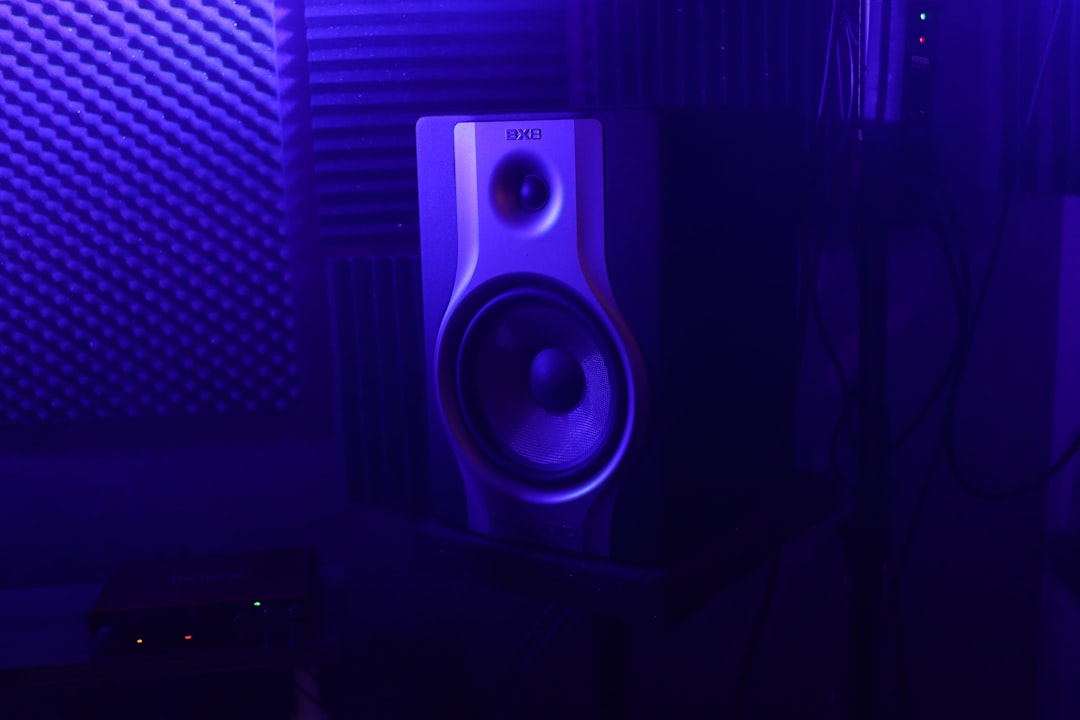
If you’re weighing krk rokit vs yamaha hs, here’s the short version: the KRK Rokit line is the fun, bass-forward, forgiving monitor that beginners love and that sounds great on day one, while the Yamaha HS series is the flatter, more honest reference that tells you the truth about your mix. Neither is “better” in a vacuum — the right pair depends on your room, your ears and what you actually make. This guide walks through how they differ so you can pick with confidence.
Violet Recording is reader-supported — we may earn a commission from links on this page, at no extra cost to you.
Quick verdict: which studio monitor should you buy?
Both lines are excellent value and both will serve a home studio for years. Choose based on the sound you want to hear and the room you’re working in.
| Monitor | Best for | Sound signature | Common sizes | Price check |
|---|---|---|---|---|
| KRK Rokit RP5 G4 | Beginners, EDM/hip-hop, smaller rooms | Enhanced low end, exciting, forgiving | 5″ woofer | Shop on Amazon |
| KRK Rokit RP7 G4 | Bigger rooms, bass-heavy genres, more headroom | Bold, punchy, scooped-friendly | 7″ woofer | Shop on Amazon |
| Yamaha HS5 | Reference mixing, small rooms, all genres | Flat, honest, revealing | 5″ woofer | Shop on Amazon |
| Yamaha HS7 | Reference mixing with more low-end reach | Flat, detailed, neutral | 6.5″ woofer | Shop on Amazon |
| Yamaha HS8 | Larger rooms, full-range reference, no sub needed | Flat, extended, uncoloured | 8″ woofer | Shop on Amazon |
Quick pick: Want monitors that sound impressive out of the box and make bass-driven music feel exciting? Go KRK Rokit. Want monitors that force you to fix problems so your mixes travel to other speakers? Go Yamaha HS. If you mostly translate mixes and want the safest long-term reference, the Yamaha HS5 (Shop on Amazon) is the classic recommendation.
KRK Rokit vs Yamaha HS: the core difference in sound
The single biggest thing that separates these two lines is their tuning philosophy, and understanding it makes the whole decision easier.
The KRK Rokit series is voiced with a deliberate “smile” — boosted lows and a lifted top end. That gives kick drums and 808s real weight and makes cymbals and vocals sparkle. It’s genuinely enjoyable to listen to, which is why so many bedroom producers fall for them. The G4 generation added a small LCD screen and built-in DSP room-correction EQ, so you can dial back some of that bass emphasis if your room is boomy. The catch: if your monitors already flatter the low end, you may under-cook the bass in your mix, so it sounds thin on systems that aren’t hyped.
The Yamaha HS series aims for the opposite. These are “reference” monitors — the goal is a flat, uncoloured response that shows you exactly what’s on the recording, warts and all. Mixes done on HS monitors tend to translate well because if it sounds good on something this honest, it usually sounds good everywhere. The trade-off is that they can feel less “exciting” and even a bit bright or harsh on bad recordings — but that harshness is often information, not a flaw. For learning to mix, that honesty is a feature.
If you’re still deciding whether monitors are even the right call versus mixing on headphones, our guide on studio monitors vs headphones for mixing is worth a read first.
Matching the monitor size to your room
Woofer size matters more than most beginners realise, and it’s where people waste money. A bigger woofer moves more air and reaches lower, but in a small, untreated room that extra bass has nowhere to go — it builds up, reflects off the walls and makes low-end decisions almost impossible.
- Small room (up to ~3 x 3 m / bedroom desk setup): A 5″ monitor is usually the sweet spot. The KRK Rokit RP5 G4 (Shop on Amazon) or Yamaha HS5 (Shop on Amazon) will give you plenty without overloading the space.
- Medium room with some treatment: Step up to a 6.5″–7″ like the Yamaha HS7 (Shop on Amazon) or KRK Rokit RP7 G4 (Shop on Amazon) for more headroom and low-end reach.
- Larger, treated room: An 8″ like the Yamaha HS8 (Shop on Amazon) can deliver near-full-range sound and may let you skip a subwoofer.
Whatever you choose, placement and acoustics will affect the sound more than the badge on the front. Get the basics right with our walkthroughs on how to position studio monitors and acoustic treatment for home studios. A cheaper monitor in a well-treated room beats an expensive one in a boomy corner every time.
Build, features and connectivity
Both ranges are solidly built active monitors — each speaker has its own amplifier, so you just need an audio interface to feed them. There are meaningful differences in the details, though.
The KRK Rokit G4 monitors use a distinctive yellow Kevlar woofer and matching tweeter, an efficient Class D amplifier, and a front-facing bass port that makes them a little more tolerant of being placed near a wall. Their standout feature is the rear DSP with 25 room-tuning presets and a small display — a genuinely useful tool for taming a problem room without extra gear. Inputs cover XLR, TRS and RCA, so they’re easy to connect to almost anything.
The Yamaha HS monitors lean on Yamaha’s decades of studio heritage (the white woofer is a nod to the legendary NS-10). They use a bi-amped design with separate amps for the woofer and tweeter, a rear bass port, and simple ROOM CONTROL and HIGH TRIM switches to shave low or high frequencies if your placement demands it. Connections are XLR and TRS only — no RCA — so a phono-only source will need adapters. The overall aesthetic is clean, understated and unmistakably “studio”.
Rear ports on both lines mean you shouldn’t jam them hard against a wall; give them some breathing room and pull them forward if you can. If you’re building the desk around them, our home studio gear checklist covers stands, isolation pads and the rest.
Who each monitor is really for
Here’s how the choice usually shakes out in practice.
Pick the KRK Rokit if: you make bass-heavy music (hip-hop, EDM, trap, pop), you’re newer to production and want speakers that sound great immediately, you enjoy the listening experience as much as the work, or you have a slightly awkward room and want the built-in DSP to help. The RP5 G4 is the natural starting point; the RP7 G4 if you have the space and want more low-end authority.
Pick the Yamaha HS if: you’re serious about learning to mix, you work across many genres, you value translation above excitement, or you already have some acoustic treatment so the flat response can shine. The HS5 is the go-to for small rooms, the HS7 splits the difference, and the HS8 is for bigger rooms where you want full-range detail without a sub.
One honest note: many experienced engineers nudge beginners toward the Yamaha HS specifically because it’s less flattering. Learning to mix on an honest monitor builds better habits faster. But if a hyped sound keeps you inspired and actually finishing tracks, the Rokit is a perfectly valid choice — the best monitor is the one you’ll learn inside-out. Whichever you buy, spend time understanding nearfield vs midfield monitor distances and referencing your mixes on other systems.
Value: what you actually get for the money
These two lines compete at almost the same price points, size for size, so cost rarely decides it. The Rokit tends to feel like more “wow” per dollar thanks to its exciting voicing and the bonus DSP screen. The Yamaha feels like more “trust” per dollar — a professional tool with a resale value and reputation that holds up for years.
Prices shift constantly and often bundle deals appear, so check both before buying: the KRK Rokit RP5 G4 (Shop on Amazon) and the Yamaha HS5 (Shop on Amazon) are the two most-cross-shopped models. Check the current price on Amazon for each, factor in a matching pair of stands and isolation pads, and remember that both are usually sold as single speakers — you need two for a stereo setup.
Frequently asked questions
Are KRK Rokit or Yamaha HS better for beginners?
Both are beginner-friendly. KRK Rokit monitors are more immediately satisfying and forgiving, which many newcomers prefer, and their built-in room-tuning DSP helps in untreated spaces. Yamaha HS monitors are flatter and less flattering, which teaches better mixing habits faster but can feel harsh at first. If motivation matters most, go Rokit; if you want the most honest learning tool, go Yamaha HS.
Do I need acoustic treatment for either of these monitors?
Yes — some treatment helps both dramatically. Even a couple of broadband absorbers at your first reflection points and a bit of bass trapping will improve low-end accuracy more than upgrading speakers would. Both lines have rear ports, so keep them off the wall. See our guide on acoustic treatment for home studios to start cheaply.
Can I mix professionally on KRK Rokit or Yamaha HS?
Absolutely. Plenty of released records have been mixed on both. The key is learning your specific monitors thoroughly and referencing your mixes on headphones, phones and car speakers to confirm they translate. The Yamaha HS’s flat voicing gives it a slight edge for reference work, but a well-learned pair of Rokits will get you professional results too.
Explore more in our studio monitors hub, or keep learning with monitors vs headphones for mixing, how to position studio monitors and what reference headphones are.



