
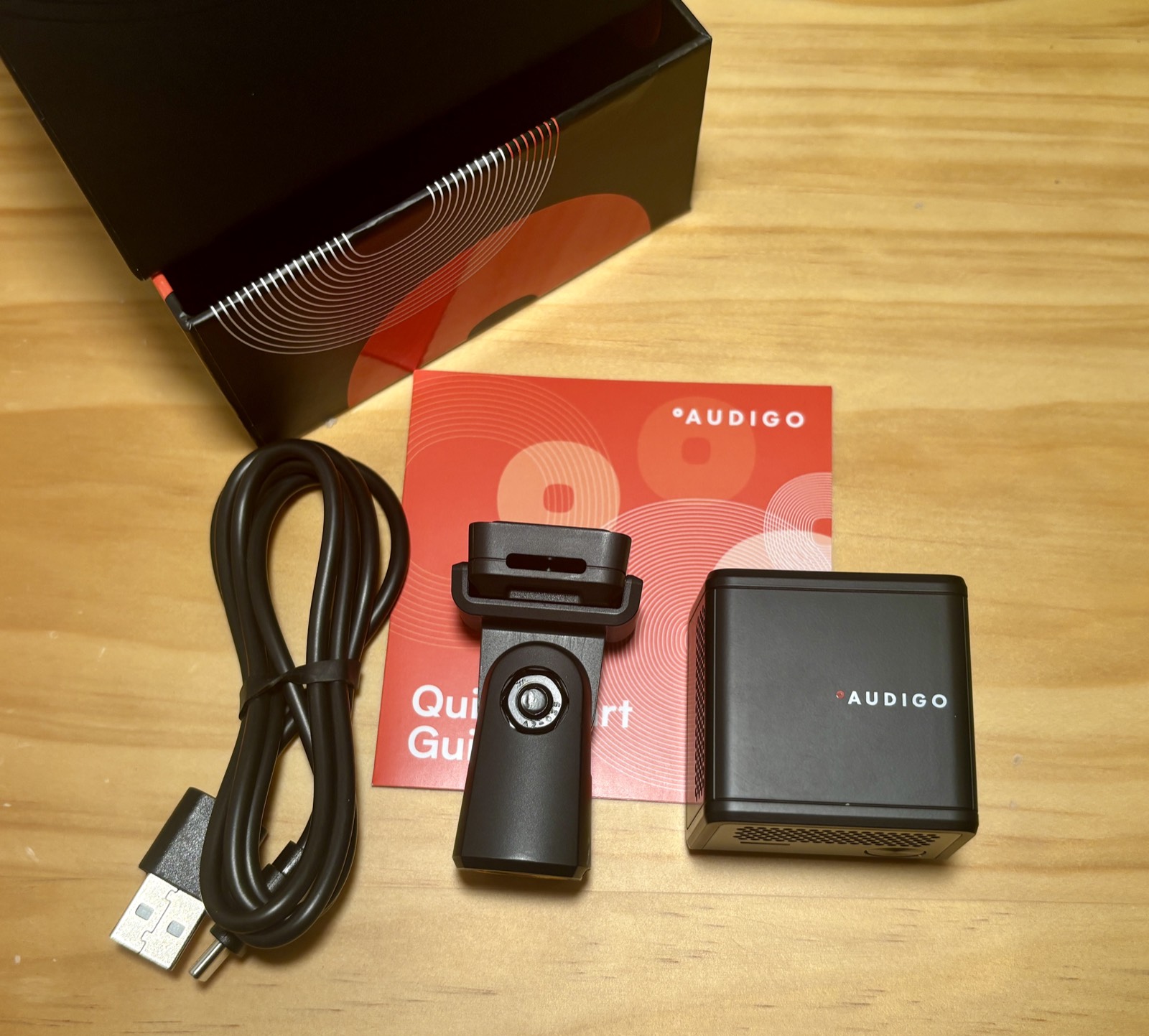
The Audigo vs Shure MV88 question comes up because both are compact stereo condenser mics aimed at capturing good audio on the go — but they solve it in almost opposite ways. The Audigo is a wireless, battery-powered mic that records to its own internal memory and edits in an app. The Shure MV88 is a small digital condenser that plugs straight into your phone and records into a companion app in real time. One frees you from the phone; the other lives on it.
Violet Recording is reader-supported — we may earn a commission from links on this page, at no extra cost to you.
Below we break down what each really does, who it suits, and where each falls short.
Audigo vs Shure MV88 at a glance
The short version: choose Audigo when you want to place a mic near an instrument or performance across the room and record untethered with real stereo depth. Choose the Shure MV88 when you want a cheaper, plug-and-play mic on your phone that you can monitor live.
- Core idea: Audigo records wirelessly to its own memory; the MV88 plugs into your phone and records to it.
- Stereo: both use mid-side stereo; Audigo lets you adjust width after the take in its app.
- Live monitoring: the MV88 lets you monitor as you record; Audigo does not (it writes to internal memory).
- Placement: Audigo can sit anywhere in the room; the MV88 is fixed to the phone.
- Price: the MV88 is the more affordable option; Audigo sits higher at around $249.
What Audigo does well
The Audigo is built around one clever idea: it records a full-quality 24-bit/48kHz WAV file to its own internal memory, then transfers it to your phone afterward. Your take never depends on a flawless wireless link, and you are not tethered to the phone while recording.
Its two condenser capsules work in a mid-side arrangement, so it captures a real stereo image with a sense of space — and you can adjust the stereo width afterward in the Audigo Studio app. That makes it genuinely good for acoustic guitar, piano, vocals, ensembles and live rooms, where capturing the room is part of the performance. You can place it across the room near the source, hit record, and build a multitrack project (even sync up to four Audigos) without cables, an interface or a laptop.
It is not flawless. Because it records to internal memory, you cannot monitor the signal live while recording, its noise reduction is gentle rather than a rescue tool, and some advanced app features sit behind the paid Studio+ subscription. For untethered music capture, though, those are trade-offs many players happily accept — our full Audigo review has the complete rundown.
What the Shure MV88 does well
The Shure MV88 (and the USB-C MV88+ video kit) is a proven, affordable way to get clean stereo audio straight into your phone. It plugs directly into the device, so there is nothing to charge and no pairing — you open the ShurePlus MOTIV app, set your pattern and gain, and record. Crucially, you can monitor the signal live through the app, so you hear clipping, handling noise or bad placement before the take is over.
Because it captures to the phone in real time, it slots neatly into a phone-centric workflow: talking-head videos, quick interviews at the phone, podcast segments and voice notes. If your subject is right at the phone and you want the cheapest route to better sound with live control, the MV88 is hard to beat.
Audigo vs Shure MV88: which should you choose?
Pick the Audigo if you are a musician or performer who wants to place a mic near a guitar, piano, vocalist or ensemble and capture the room in stereo — untethered, standalone and reliable, with a multitrack app to build on afterward. Pick the Shure MV88 if you want an affordable, plug-in mic that lives on your phone, that you can monitor live, for dialogue and on-phone content. In short: Audigo is a tiny mobile recording studio for music; the MV88 is a better phone microphone for speech.
Want the full picture first? Read our hands-on Audigo review, or see how it stacks up against wireless systems in Audigo vs Røde Wireless GO II and Audigo vs DJI Mic 2. For more options, see our guide to the best microphones for smartphones. You can also see Audigo vs a field recorder. Still weighing models? Compare the best Audigo alternatives.



