
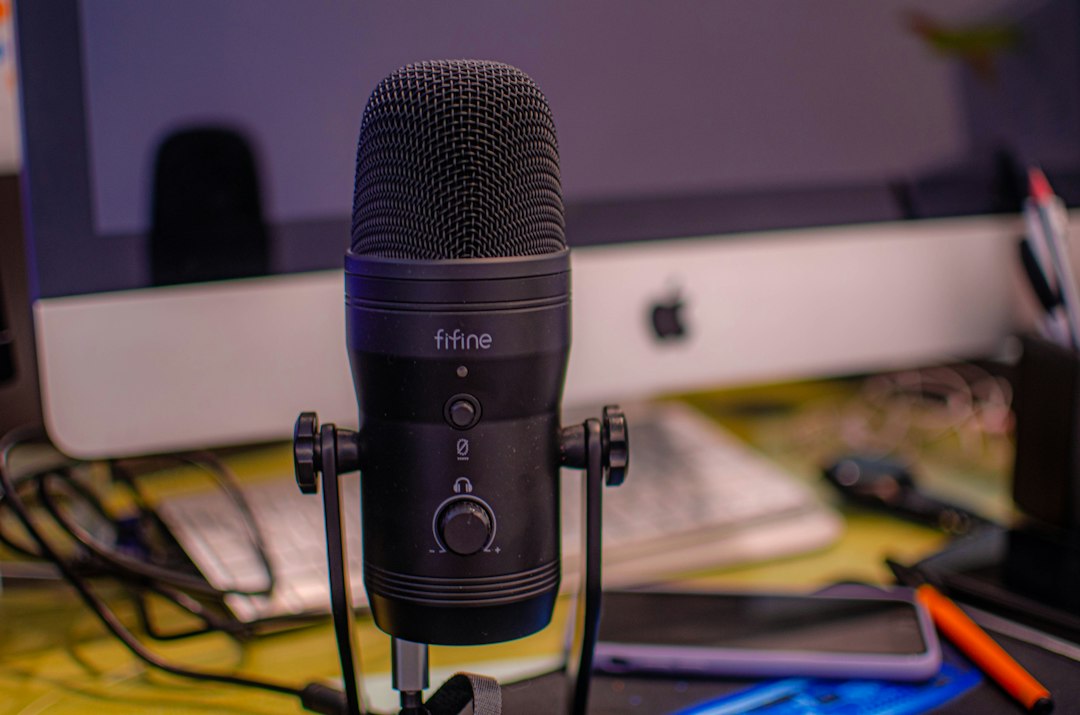
Content creators rarely record in one way. A Monday might be a talking-head YouTube video at the desk, Tuesday a walk-and-talk short on a phone, and Friday a livestream or a sit-down interview. That is why the best mic for content creators is less about one magic model and more about matching the microphone to the format you shoot most. This guide groups proven picks by how you actually create: desk and USB mics, wireless clip-ons, phone-friendly kits and on-camera shotguns, with honest trade-offs for each so you buy once and stop fighting your audio.
Start with your format, not the spec sheet
Every creator mic solves a distance problem. The closer the capsule sits to your mouth, the less room echo and background noise it hears. A desk mic on an arm works because it lives a few inches from your face. A wireless lav works because it clips to your collar and travels with you. An on-camera shotgun is the most convenient option but sits furthest away, so it suits run-and-gun shooting and ambient sound more than polished voiceover. Decide where you will be standing or sitting for most of your content, then pick from that group.
Best mic for content creators: our picks by format
Shure MV7+ (desk, USB and XLR)
The Shure MV7+ is a dynamic broadcast mic with both USB-C and XLR outputs, so it plugs straight into a laptop today and into an interface or podcast mixer later. Shure’s software adds a real-time denoiser and plosive control, and the dynamic capsule ignores much of an untreated room.
Best for: talking-head YouTubers, podcasters and streamers who record at a desk most days.
- Pros: USB and XLR in one mic, forgiving in noisy rooms, strong voice processing.
- Cons: needs to be close to your mouth, so it is visible on camera and useless for walk-and-talk.
Shure MV6 (budget desk USB)
The Shure MV6 is a compact USB-C mic aimed at first-time creators. It ships with a desk stand and cable and leans on voice isolation, an adjustable denoiser and auto level to keep your voice steady without learning gain staging.
Best for: new creators upgrading from a headset or laptop mic on a modest budget.
- Pros: simple setup, helpful automatic processing, small footprint.
- Cons: USB only, so there is no upgrade path into an XLR mixer.
RODE PodMic USB (desk, broadcast tone)
The RODE PodMic USB is a heavy end-address dynamic with XLR and USB-C outputs. Through RODE’s free software you can add compression, noise gating and broadcast-style tone shaping, giving a radio-like voice that suits commentary and long-form talk.
Best for: creators who want a classic broadcast look and sound on a boom arm.
- Pros: dual outputs, rich voice tone, built like a tank.
- Cons: heavy, so it needs a sturdy arm; less suited to a small desk stand.
Sennheiser Profile USB (desk, condenser)
The Sennheiser Profile is a cardioid condenser with hands-on dials for gain and mix, a mute button and a headphone jack, all without needing software. Condensers capture more detail and air than dynamics, which flatters voiceover and ASMR-style content in a quiet room.
Best for: voiceover creators and streamers in a quiet, reasonably treated room.
- Pros: natural detailed sound, physical controls, quick plug-and-play.
- Cons: picks up keyboard clicks and room echo more than a dynamic mic.
DJI Mic 2 (wireless, two-person)
The DJI Mic 2 two-transmitter kit gives you a pair of clip-on mics, a receiver with a small touchscreen and a charging case. Transmitters can record internally as a backup, and intelligent noise cancelling helps on busy streets. The receiver works with cameras, phones and computers.
Best for: vloggers, interviewers and two-host shows filmed on location.
- Pros: fast setup, onboard backup recording, charging case keeps everything powered.
- Cons: clip-on capsules show on camera unless you add hidden lavaliers.
RODE Wireless PRO (wireless, pro backup)
The RODE Wireless PRO adds 32-bit float onboard recording and timecode to RODE’s clip-on wireless format, so a shout or a sudden laugh will not ruin the take, and multi-camera footage lines up faster in the edit. The kit includes lavalier mics for a cleaner on-screen look.
Best for: creators shooting multi-camera interviews or branded work where a lost take costs money.
- Pros: 32-bit float backup, timecode, included lavaliers.
- Cons: splurge-band pricing and more features than a casual vlogger needs.
Hollyland Lark M2 (wireless, phone-first)
The Hollyland Lark M2 is a tiny button-style transmitter, around 9 grams, with a USB-C receiver that plugs straight into a phone. It records at 48 kHz/24-bit and offers noise cancellation, making it a common choice for short-form video shot on a phone.
Best for: TikTok, Reels and Shorts creators who film mostly on a phone.
- Pros: extremely light, plug-in phone receiver, very affordable.
- Cons: no 32-bit float backup, and heavy noise cancellation can sound processed.
RODE VideoMic NTG (on-camera shotgun)
The RODE VideoMic NTG is a camera-mounted shotgun with both a 3.5mm output and USB-C, so it can feed a camera, a phone or a computer. Variable gain and a rechargeable battery make it a flexible one-mic solution for B-roll, vlogs and close-range talking shots.
Best for: mirrorless and DSLR creators who want better sound without a separate recorder.
- Pros: natural shotgun sound, USB-C option, no wireless pairing to manage.
- Cons: quality drops quickly beyond arm’s length from the subject.
RODE VideoMicro II (compact on-camera)
The RODE VideoMicro II is an ultra-compact shotgun that runs from your camera’s plug-in power, so there is no battery to forget. It is a cheap, light upgrade over any built-in camera mic.
Best for: travel vloggers and gimbal shooters counting every gram.
- Pros: tiny, no batteries, affordable.
- Cons: no gain control or filters on the mic, so you rely on camera settings.
Comparison table
| Product | Best for | Key feature |
|---|---|---|
| Shure MV7+ | Desk video and podcasts | USB-C plus XLR, real-time denoiser |
| Shure MV6 | First desk mic | Auto level and voice isolation |
| RODE PodMic USB | Broadcast-style talk | XLR plus USB-C with onboard processing |
| Sennheiser Profile | Voiceover in quiet rooms | Condenser with hardware dials |
| DJI Mic 2 | Two-person location shoots | Internal backup recording, charging case |
| RODE Wireless PRO | Pro interviews | 32-bit float and timecode |
| Hollyland Lark M2 | Phone short-form | 9 g transmitter, USB-C phone receiver |
| RODE VideoMic NTG | Camera-top all-rounder | 3.5mm and USB-C outputs |
| RODE VideoMicro II | Light travel rigs | Plug-in powered, no battery |
How to choose
Dynamic or condenser. In a bedroom with hard walls, a dynamic desk mic such as the MV7+ or PodMic USB will sound cleaner than a condenser, because it hears less of the room. Choose a condenser only if your space is quiet and soft.
USB, XLR or both. USB is simplest for solo creators. If you might add a co-host or a mixer later, a dual-output mic protects your investment. Our USB microphones for streaming roundup goes deeper on desk options.
Wireless details that matter. Look for onboard backup recording, ideally 32-bit float, plus the right receiver connector for your devices: USB-C for modern phones and computers, 3.5mm for cameras. For hidden-mic options see our lavalier mics for phones guide.
On-camera limits. A shotgun on the camera is only as good as the distance to your mouth. If you film more than an arm’s length away, switch to wireless. Our shotgun microphones roundup covers boom-style options too.
Processing is a crutch, not a cure. Denoisers and auto level help, but placement, a quieter room and a soft furnishing or two still beat software. Heavy noise reduction can make voices sound underwater.
If your channel is centred on long-form YouTube, also read our best microphone for YouTube guide for picks tuned to that workflow.
FAQ
What is the best mic for content creators on a budget?
For desk content, a compact USB mic like the Shure MV6 is the easiest start. For phone video, a small wireless kit such as the Hollyland Lark M2 gives the biggest jump over the built-in microphone for the money.
Do I need a wireless mic or a desk mic?
If you sit in one spot, a desk mic on an arm will sound better and needs no charging. If you move, film outdoors or shoot interviews, a wireless clip-on keeps the mic close to your mouth wherever you go. Many creators end up owning one of each.
Can one microphone cover YouTube, podcasts and streams?
Yes, if those all happen at a desk. A dual USB and XLR dynamic like the Shure MV7+ or RODE PodMic USB handles all three. It will not replace a wireless mic for walk-and-talk or location shots.