
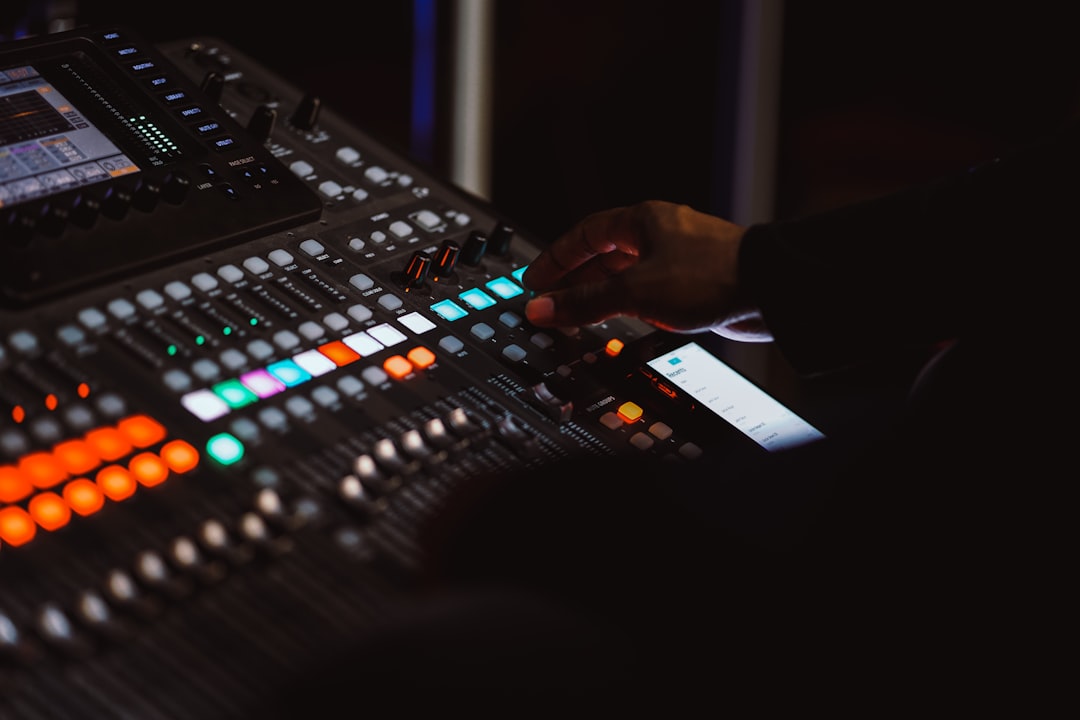
To mix a sample-based beat, your first job is different from mixing a beat built entirely from scratch: the sample already arrives mixed, so you’re balancing a finished stereo bed against the drums, bass and any melodic layers you add on top. Get the sample sitting at the right level and tone, carve room for your kick and 808, then glue the whole thing together. Do that in order and a flat, boxy loop turns into a beat that knocks.
Violet Recording is reader-supported — we may earn a commission from links on this page, at no extra cost to you.
The trap most people fall into is treating the sample like a raw multitrack. It isn’t. Whether you chopped it from a vinyl record, a royalty-free pack or an AI-generated stem, that loop is already a full mix in miniature — someone else’s EQ, compression and reverb baked into two channels you can’t take apart. So the technique is less about surgery inside the sample and more about how everything you add relates to it. Here’s the order I actually work in.
Start by understanding what the sample already is
Before you touch a fader, listen to the sample on its own and ask what it’s giving you. Is it warm and dark, or bright and thin? Is there already a lot of low-mid body, or is it hollow down there? Does it have its own drums baked in, or is it purely melodic? Those answers decide everything downstream. A soul loop with a fat, present low end will fight your bass; a thin, filtered loop will leave a gap you need to fill.
Also be honest about the source quality. Old vinyl samples carry hiss, crackle and a rolled-off top end — that’s often part of the charm, but it means the loop won’t have crisp air up high, so don’t waste time trying to force it. Modern pack samples are cleaner but can sound generic and need character added back. Knowing which problem you have stops you reaching for the wrong tool.
How to mix a sample-based beat by placing the sample first
Set the sample’s level and tone before you build anything around it, because it’s the bed everything else sits on. Bring it up to a comfortable working level — leave yourself plenty of headroom, aim to peak well below 0 dBFS so you’ve got room for drums and bass on top. Then shape it with broad EQ, not surgical cuts. A gentle high-pass somewhere around 30–60 Hz clears out subsonic rumble the sample doesn’t need, which frees the very bottom for your kick and 808.
The single most useful move on a sample-based beat is a low-mid cut. Chopped loops almost always pile up energy somewhere in the roughly 200–500 Hz region, and that’s exactly where mud lives. Sweep a bell there, find the boxiest spot, and pull it down a few dB to taste. You’re not trying to gut the loop — just make space so your drums can breathe. If the sample also has its own bassline that clashes with your 808, a high-pass on the sample around 100–150 Hz lets your sub own the low end while the loop keeps its body. Stock EQ handles all of this; you don’t need anything fancy. Our EQ and compression fundamentals guide covers the moves, and the free EQ cheat sheet in our tools gives you a frequency map to sweep against.
Fit the drums and 808 around the loop
Now build the low end. Your kick and 808 have to punch through a sample that already occupies the low-mids, so the same complementary-EQ thinking applies here as with any kick-and-bass balance: decide who owns what. A kick fundamental usually lives somewhere around 50–100 Hz, and an 808 owns the sub below and around that. If you high-passed the sample earlier, that space is already yours.
Where drums clash with the loop, sidechain compression is your friend. Trigger a compressor on the sample (or just on the sample’s low end) from your kick, so the loop ducks a couple of dB each time the kick lands and the transient cuts through cleanly. Keep it subtle in most styles — 1–3 dB of gain reduction, fast attack, release timed so the sample is back before the next hit. In some trap and lo-fi productions a more obvious pump is part of the vibe, so use as much as the track wants. If your drums still feel buried, the fix is usually more transient and less volume: a touch of attack shaping on the kick reads as “harder” without eating headroom. For genre-specific drum moves, see how to mix trap drums and how to make 808s hit harder.
Add character with saturation and light compression
Sample-based beats live and die on vibe, and saturation is how you get it. A little harmonic drive on the sample — or on the whole beat via a bus — adds warmth, thickens thin loops and helps a clean modern sample sit in the same world as gritty drums. Start gentle: you want the loop to feel fuller and a touch grittier, not obviously distorted. Tape-style or tube-style saturation both work; drive by ear until it feels glued, then back it off slightly.
Bus compression ties the elements together. Route your drums, 808 and sample to a mix bus (or use your master bus lightly) and apply a slow, gentle compressor — a low ratio around 2:1, just 1–3 dB of gain reduction, medium attack so transients survive, auto or medium release. The goal is cohesion: the beat should start to feel like one thing instead of layers stacked on top of a loop. Stock saturation and compression do this job well on most beats. That said, if you’re chasing a specific analogue character — a particular tape machine, console or tube colour — that’s one genuine place a third-party plugin can beat stock; a characterful bus compressor or saturator earns its place, though it’s a flavour choice, not a fix for a bad balance.
Common problems and how to fix them
The beat sounds muddy. Almost always low-mid buildup between the sample and your drums. Revisit that 200–500 Hz cut on the loop, high-pass anything that doesn’t need low end, and check you’re not stacking two bass sources in the same octave.
The sample sounds thin or dull against the drums. Old or heavily filtered loops lack top end. A gentle high-shelf lift, or a little saturation to generate new harmonics, brings life back — but don’t expect a crackly vinyl chop to sparkle like a modern master.
The drums are too loud or too quiet against the loop. This is a level problem, not a plugin problem. Balance drums and sample together by ear, and reference a professionally mixed track in the same style to calibrate how loud your drums should sit. Mute the sample for a bar to hear the drums alone, then bring it back.
It’s clipping when everything plays together. You started too hot. Pull the sample down and rebuild your levels with more headroom — clean gain staging solves this before it starts. Our gain staging guide walks through it, and the decibel and gain tools help you keep track.
Finishing the beat and getting it loud
Once the balance is right, the beat needs to reach a competitive loudness without squashing the life out of it. That’s a mastering job, whether you do it yourself with a limiter on the master or hand it to an online service like LANDR. A common streaming target is around -14 LUFS integrated, but treat that as a ballpark rather than a rule — beats often master hotter than that to compete in a playlist, and your ears matter more than the meter. If you’d rather let a service handle the final polish and loudness, you can master your beat online here.
To understand what mastering actually does and how loud to push, read what is mastering and LUFS explained, and check your levels against the LUFS target reference in our free tools. For the wider workflow, the beginner’s guide to mixing your first song and the full mixing and mastering hub take you the rest of the way. One clearance note worth stating plainly: if you’re releasing commercially, sampling someone else’s recording without permission is a legal issue, not a mixing one — make sure you have the right to use whatever you chopped.
Frequently asked questions
Should I EQ inside the sample or only around it?
Mostly around it. A chopped loop is already a finished stereo mix, so you can’t separate its parts the way you would a multitrack — aggressive surgery tends to hurt more than it helps. Stick to broad moves on the sample itself: a high-pass to clear the sub, a low-mid cut to kill mud, maybe a gentle shelf for tone. Then do the detailed work on the drums, bass and layers you add, shaping them to fit the sample rather than fighting it.
Why does my 808 disappear under the sample?
The sample almost certainly has its own low end competing in the same octaves. High-pass the loop somewhere around 100–150 Hz so your 808 owns the sub, and consider sidechaining the sample to the kick so the low end ducks when the drums hit. If it’s still lost, the 808 may need a little saturation to add harmonics higher up, so it reads on small speakers that can’t reproduce the fundamental at all.
How loud should a sample-based beat be?
Loud enough to compete but not crushed. Around -14 LUFS integrated is a common streaming reference point, though beats frequently sit hotter to hold their own in a playlist — treat any number as a starting point and trust your ears. The bigger win is a clean, well-balanced mix underneath: a beat that’s mixed properly needs far less limiting to feel loud than one you’re trying to rescue at the master stage.



