
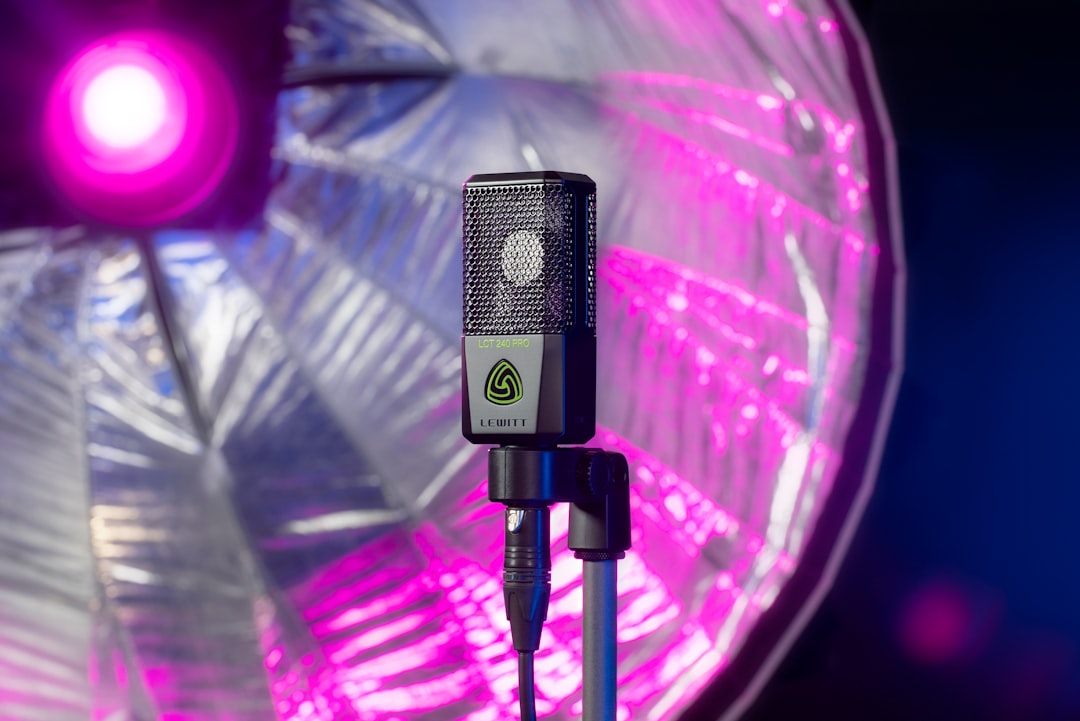
A genuinely good microphone for home recording usually lands somewhere in the low hundreds of dollars — enough to sound professional, not so much that you are mostly paying for a name. So when people ask how much does a microphone cost, the honest answer is that you can spend anywhere from about $50 to well over $1,000, but most bedroom producers, podcasters and streamers never need to go past roughly $200–$400. This guide maps the real price bands, explains what each one actually buys, and names widely-used mics that represent good value at every level.
Violet Recording is reader-supported — we may earn a commission from links on this page, at no extra cost to you.
Quick answer: how much does a microphone cost by tier?
Here is the short version before the reasoning. The bands below are approximate and current at the time of writing — always confirm the live figure on the listing, because street prices and deals move constantly. Treat these as tier-level context, not exact quotes.
| Tier | Approx. band | Best for | Example pick |
|---|---|---|---|
| Entry / plug-and-play USB | roughly $50–100 | Podcasts, streaming, first-ever setup | Samson Q2U — Shop on Amazon |
| Serious starter XLR condenser | roughly $100–200 | Home vocals, voiceover, acoustic | Audio-Technica AT2020 — Shop on Amazon |
| Prosumer sweet spot | roughly $200–400 | Release-quality vocals and instruments | Rode NT1 — Shop on Amazon |
| Pro broadcast dynamic | upper end of the prosumer range | Untreated rooms, spoken word, vocals | Shure SM7B — Shop on Amazon |
| High-end studio condenser | roughly $700 and up | Professional and critical work | Neumann TLM 103 — Shop on Amazon |
For any specific model above, don’t take a fixed figure from us — check the current price on Amazon, since sales and stock shift week to week. The point of the table is the shape of the market, not a quote.
Why microphone prices vary so much
Two mics can both record a vocal and cost twenty times different amounts. The gap is not marketing alone — several real things move the number. Build quality and the tolerances of the capsule matter, because hand-selected, tightly-matched diaphragms are expensive to manufacture. The electronics behind the capsule — the little preamp and transformer inside the mic — get quieter and cleaner as you climb. Self-noise, the faint hiss a mic adds on its own, drops on pricier models, which matters for quiet sources like fingerpicked guitar or soft speech.
You are also paying for consistency and longevity at the top end. A studio-grade mic is more likely to sound exactly like the reviews promised, unit to unit, and to hold its resale value for years. That said, diminishing returns bite hard. The jump from an entry mic to a prosumer mic is enormous; the jump from a prosumer mic to a flagship is real but subtle, and often only audible in a treated room through good monitoring. If you want the fuller picture on how capsule design changes with budget, our guide to condenser vs dynamic microphones explains what actually shifts as you spend more, and large- vs small-diaphragm condensers covers the rest.
The entry tier: USB mics from roughly $50–100
This is where most people should start, and there is no shame in it. Entry-level USB microphones plug straight into a laptop, need no separate audio interface, and get you recording in minutes. A modern budget mic sounds dramatically better than anything at this price a decade ago. The trade-off is flexibility rather than raw quality — you are locked into the mic’s built-in converter and preamp, and budget mics tend to be a little less forgiving of a bad room, so treat your space and set your gain carefully. A duvet on the wall behind you, or simply recording in a clothes-filled closet, can lift a cheap mic’s results more than doubling your budget would.
The standout here is the Samson Q2U, a dynamic mic with both USB and XLR outputs — plug it into a laptop today and into an interface later. Shop on Amazon. A close alternative is the Audio-Technica ATR2100x-USB, which shares that dual-output flexibility. Shop on Amazon. If you want the well-known content-creator look with a headphone monitoring dial, the Blue Yeti is the household name in this band. Shop on Amazon. Check the current price on Amazon for each — this tier goes on sale often. For the deeper trade-off, see USB mic vs audio interface.
The starter XLR tier: condensers around $100–200
Once you add an audio interface, the mic world opens up. In this band you can buy a proper XLR condenser that captures far more detail than a phone or laptop mic. The Audio-Technica AT2020 has been the default first “real” studio mic for years — honest, quiet and forgiving. Shop on Amazon. The AKG P220 is a solid large-diaphragm alternative in the same territory. Shop on Amazon.
Condensers are sensitive and need phantom power from your interface, which is why they pair with a unit like a Focusrite Scarlett rather than a bare USB port — budget for that too. They also pick up your room, so set aside a little for acoustic treatment. If you would rather have a rugged dynamic for live vocals or close-miking amps, the Shure SM58 and its studio sibling the SM57 are decades-proven standards. Shop on Amazon for the SM58, or Shop on Amazon for the SM57.
The prosumer sweet spot: $200–400 is where value peaks
This is the band we point most home recordists toward, because the quality jump from the starter tier is real and the jump above it is subtle. The Rode NT1 is a benchmark large-diaphragm condenser — very low self-noise, flattering on vocals — and it ships with a shock mount and pop filter, which quietly saves you money you would otherwise spend on accessories. Shop on Amazon. On the dynamic side, the industry-standard Shure SM7B sits toward the top of this band and is the mic behind countless podcasts and vocal records; it is superb at rejecting a noisy, untreated room, though it wants plenty of clean gain from your interface or an inline booster. Shop on Amazon. Our full Shure SM7B review digs into that gain question.
Spend here and you are buying a microphone that genuinely will not hold your recordings back for years. At this point the limiting factor becomes your room, your choice of polar pattern, your placement and your performance — not the mic. Check the current price on Amazon for either pick before you commit.
The high-end tier: $700 and beyond
Above roughly $700 you enter the territory of career studios and serious enthusiasts. The Neumann TLM 103 is a modern-classic large-diaphragm condenser prized for a smooth, present vocal sound. Shop on Amazon. Its smaller sibling, the Neumann TLM 102, carries much of that character in a more compact body. Shop on Amazon. The multi-pattern AKG C414 XLII is a studio Swiss Army knife with selectable polar patterns for vocals, instruments and rooms. Shop on Amazon.
Be honest with yourself here: a flagship mic in an untreated bedroom through a shaky preamp will often sound worse than a prosumer mic in a decent room. Unless you are recording clients, chasing a specific signature, or your room and interface are already excellent, the money is usually better spent first on acoustic treatment, a cleaner interface, or simply more practice. Check the current price on Amazon if you are set on this tier.
So how much does a microphone cost for your needs?
Match the mic to the job and to the rest of your chain. For podcasting, streaming or your very first recordings, stay in the entry band and put the savings toward a decent interface and headphones. For serious home vocal production, the prosumer band is where quality stops being the limiting factor. Only push past $700 if you already have treatment, a clean preamp and a specific sonic goal you cannot reach otherwise.
A useful rule of thumb: your microphone should be neither the most expensive nor the cheapest link in your signal chain. Spread the budget so no single weak link drags the recording down — a modest interface pairs best with a modest mic, and a flagship mic wastes its potential behind cheap conversion. When you do upgrade, sell the old mic; good microphones from Shure, Rode and Neumann hold their value remarkably well on the used market, which softens the real cost of moving up a tier. Before you overspend, read our advice on building a home studio on a budget, browse the full microphones category, and if you are stuck between models, our best microphones for home recording roundup narrows it down by use case.
Frequently asked questions
Is a cheap microphone good enough for podcasting?
Yes. A dynamic USB/XLR mic like the Samson Q2U or Audio-Technica ATR2100x produces broadcast-usable audio, especially in a normal, soft-furnished room. Podcast listeners care far more about clear speech and low background noise than about the last few percent of fidelity, so the entry band is genuinely enough to launch and sound professional.
Why do professional studio microphones cost so much more?
You are paying for hand-matched capsules, ultra-low self-noise, premium electronics, tight manufacturing tolerances and long-term consistency. Those refinements are real, but they deliver diminishing returns — the improvement from a prosumer mic to a flagship is subtle and usually only audible in a treated room through quality monitoring, which is why most home recordists do not need to spend that much.
Should I buy a USB or XLR microphone for the money?
USB mics are cheaper overall because they bundle their own interface, which makes them ideal for beginners and one-person podcasts. XLR mics cost more once you add an interface, but they scale — you can upgrade the interface, run multiple mics and access professional models. A dual-output mic like the Q2U or Rode NT1 lets you start on USB and move to XLR later without rebuying. Read our interface setup guide before you commit.



